Blog

  • The Supreme Court has struck down the Single Register for short-term lettings: what does this mean for owners of holiday homes?

    The Supreme Court has struck down the Single Register for short-term lettings: what does this mean for owners of holiday homes?

    A landmark ruling for owners of holiday homes and rural holiday accommodation

    The Supreme Court has annulled the Single Register of Short-Term Lettings governed by Royal Decree 1312/2024, ruling that the State did not have the authority to create such a national register. Ruling No. 620/2026 represents a very significant step for the holiday rental sector, particularly for the thousands of owners who were already complying with regional tourism regulations.

    For owners of rural holiday homes in Andalusia, this decision is particularly significant: it removes a duplicated administrative burden that could have led to confusion, additional costs and a lack of legal certainty.

    At Cubo’s Holiday Homes, we welcome this news as a victory for common sense, for a well-argued legal defence and for the constant efforts made by the sector.

    What was the Single Register of Short-Term Lettings?

    Royal Decree 1312/2024 established a Single Digital Window for Lettings and introduced a Single Register procedure for short-stay accommodation. Its aim was to organise the collection and exchange of data on accommodation advertised on online platforms, in accordance with European Regulation 2024/1028.

    In practice, this system imposed a new state-level administrative procedure on property owners who, in many cases, already had their property registered with the relevant regional tourism authority.

    This created a situation that was difficult for many property owners to understand:

    The same property could be correctly registered with the tourism authorities, comply with its obligations regarding guests, be listed on platforms and, even so, still have to go through a new state procedure in order to be advertised.

    What has the Supreme Court ruled?

    The Supreme Court has declared the Single Register of Short-Term Lettings null and void because it considers that the State did not have the authority to create it under the terms set out. The judgement states that this register overlapped with the registers already in place in the autonomous communities, which are the bodies with jurisdiction over tourism matters.

    To put it plainly: tourist rentals must be regulated, but each administration must act within its own remit.

    The ruling does not mean that the sector is left unregulated. It means that regulation must be carried out properly, with legal certainty, without duplicating procedures and without imposing obligations that do not respect the division of powers.

    A position that AVVAPRO had been calling for for months

    This ruling has not come about by chance.

    For months, AVVAPRO has argued that the Single Register placed an unnecessary administrative burden on owners and professionals who were already operating within the law.

    Juan Cubo, CEO of Cubo’s Holiday Homes and president of AVVAPRO, has maintained a clear stance: regulate, yes; organise, yes; professionalise, yes; but always with technical rigour, legal certainty and respect for the powers of each administration.

    The sector had warned that this regulation could lead to duplication of effort, delays and increased bureaucratic pressure on property owners who were already complying with Andalusian regulations.

    The ruling confirms many of these warnings.

    How does this decision affect owners with a VTAR or VUT licence?

    For owners of rural holiday accommodation or holiday homes, the news is positive, but it is important to interpret it correctly.

    The annulment of the Single Register does not remove the legal obligations of tourist accommodation. The property must continue to comply with the requirements applicable in Andalusia, hold its tourist registration where applicable, and fulfil the obligations associated with the activity.

    What has changed is that the national Single Register has been annulled due to the State’s lack of jurisdiction to create it.

    This reduces administrative burden and prevents owners who were already operating correctly from having to undertake an additional procedure that could have duplicated existing checks.

    The role of Cubo’s Holiday Homes in this context

    At Cubo’s Holiday Homes, we work every day with owners of rural cottages, villas and holiday homes who wish to generate a return on their property without sacrificing peace of mind.

    Our role is not limited to listing a property on websites. We support the owner throughout the entire process: property assessment, marketing preparation, pricing strategy, listing on platforms, guest services, cleaning, laundry, check-in and advice on the steps required to operate correctly.

    Furthermore, the fact that our CEO, Juan Cubo, is president of AVVAPRO places us in a position that is closely attuned to the regulatory landscape of the sector. This enables us to keep abreast of legal changes, defend owners’ interests and provide clear information to those who place their trust in us.

    Conclusion

    The Supreme Court ruling overturning the Single Register of Short-Term Letten is very positive news for the holiday rental sector and for owners of rural holiday homes.

    It confirms that regulating tourism is necessary, but it must be done rigorously, respecting the remit of each administrative body and avoiding unnecessary burdens on those who already comply with the regulations.

    At Cubo’s Holiday Homes, we will continue to champion a professional, responsible and safe model for owners, travellers and destinations.

    If you own a holiday home and would like to explore its potential as a holiday rental, our team can help you assess your situation and develop a professional strategy for your property.

    Frequently Asked Questions

    Has the Supreme Court abolished the tourist licence?


    No. The ruling annuls the Single State Register, but does not abolish regional tourism obligations. If your property requires a tourism registration, you must continue to comply with that requirement.

    No. Each property must comply with the relevant regulations. The annulment of the Single Register does not remove the other legal obligations.

    Yes, it affects the national framework of the Single Register. In Andalusia, regional tourism obligations continue to apply.

    You’ll be working with a company specialising in holiday rentals, with experience in managing holiday homes, marketing strategy, listing on booking platforms, guest care and advice throughout the process.

  • Where to advertise my holiday let in 2026: A strategic guide for owners

    Where to advertise my holiday let in 2026: A strategic guide for owners

    If you’re thinking of advertising your holiday home, the big question isn’t whether you should be online, but where. Visibility is the key to profitability; however, each booking platform attracts a different type of traveller. In this article, we analyse the industry giants and the importance of having a professional direct sales channel to maximise your income.

    Introduction: The holiday rental market in Spain

    Furthermore, according to reports from Exceltur, the holiday accommodation sector is currently one of the main drivers of the Spanish economy. Tourism currently accounts for around 13.4 per cent of national GDP, and non-hotel accommodation represents more than 30 per cent of total overnight stays in our country, according to the INE.

    On the other hand, globally, some platforms generate astronomical figures. In Spain alone, the economic impact of holiday accommodation exceeds 20,000 million euros. This growth has established holiday rentals as the most profitable investment option compared to conventional lettings. Therefore, in such a competitive environment, choosing the right sales channel is the difference between having a vacant property or a thriving business.

    2. The booking giants: Booking, Airbnb and Vrbo

    Firstly, having a presence on ‘OTAs’ (Online Travel Agencies) is essential for attracting international traffic. Each has its own unique character:

    It is the leading platform in terms of volume, exceeding 1 billion overnight stays annually. Furthermore, its users seek efficiency and instant confirmation. It is the indispensable tool for attracting European tourists (from the UK, Germany and Spain) and ensuring consistent occupancy, filling gaps with last-minute bookings.

    With over 7 million listings, Airbnb is a lifestyle brand. As such, it attracts a younger audience (Gen Z and Millennials) seeking an ‘experience’ and an emotional connection with their accommodation. It is the platform where thoughtfully designed properties and personalised services generate higher conversion rates and better reviews.

    Specialising in whole homes, this platform is a favourite amongst families and large groups with high purchasing power. Its most attractive metric is the ADR (Average Daily Rate), which is higher than that of other platforms, as it handles longer stays booked well in advance (an average of 49 days).

    In summary, the differences between their platforms and user profiles are confirmed by their content and distinct interfaces: Booking offers an effective service for everyone, Airbnb focuses on young people and on offering experiences that go beyond simply providing accommodation, whilst Vrbo, for its part, focuses on whole properties and on larger, older groups of family and friends. However, there are many more platforms worth exploring. 

    Smaller platforms with specific audiences

    Furthermore, there are other holiday rental platforms which, although they do not have the same volume of traffic as the major players in the sector, do stand out for having a much more specific and segmented audience.

    In this regard, platforms such as Homes & Villas by Marriott, HomeToGo, Holidu, La France du Nord au Sud and Hispanoa enable you to reach very well-defined niche markets.

    Therefore, whilst their booking volume may be lower, their value lies in the quality of the customers they target and in their ability to complement the property’s online presence.

    3. The strategic alternative: Cubo’s Holiday Homes

    In this context, Cubo’s Holiday Homes positions itself as the local partner that combines experience, technology and in-depth local knowledge, particularly in Málaga, the Costa del Sol and the Guadalhorce Valley.

    This is a channel that can be highly profitable for property owners. In fact, by eliminating the service fees charged by international giants, we offer better final prices, which boosts conversion rates. With over 400 properties under management, we receive thousands of visits each month from qualified traffic, with a particular focus on our specialisation in pet-friendly properties. Furthermore, the portal continues to grow thanks to content creation on social media and the website, which boosts traffic and search engine rankings. 

    The Comprehensive Management Service

    Property owners can delegate almost the entire management of their accommodation to us. Furthermore, we will act as your very own operations department and take care of all aspects of managing your holiday home: 

    • Multi-Channel Management: We list your property on over 100 platforms simultaneously and in a coordinated manner.
    • Professional Operations: In-house laundry service, cleaning, professional photography and deposit management.
    • 24/7 Support: Guest reception and check-in, emergency contact number and welcome kits for guests, ensuring 5-star ratings.
    • Legal Procedures: Compulsory guest registration at accommodation providers and regulatory advice.

    4. Smart Management: Technology and Strategy for Your Peace of Mind

    Having a presence on multiple booking platforms is just the first step; the real challenge is managing that visibility efficiently. At Cubo’s Holiday Homes, we turn logistical complexity into profitability through a centralised management system.

    Full Synchronisation and Dynamic Pricing

    We use cutting-edge technology so that, the moment a booking is made on any platform, the dates are automatically blocked on all other platforms, eliminating the risk of overbooking. At Cubo’s Holiday Homes, we coordinate listings across more than 100 platforms, including all those mentioned in this article, thanks to the best tool in Spain’s tourism sector. 

    Furthermore, we apply a dynamic pricing strategy. In a volatile market, you cannot afford a ‘flat rate’. We analyse the competition and local events on a daily basis to adjust your prices; a property managed in this way can generate up to 20 per cent more revenue than one with fixed prices.

    Why outsource to a professional agency?

    Managing a holiday let is a round-the-clock job. Entrusting this to us isn’t an expense; it’s an investment in your quality of life. As a result, you’ll be able to enjoy:

    • Multi-channel listing: List your property simultaneously across all industry platforms without any hassle
    • Legal certainty: Avoid administrative fines thanks to our protocols.
    • Time savings: We take care of everything whilst you reap the rewards.

    Ultimately, there is no ‘magic’ platform, but rather the perfect mix: Booking’s massive visibility, Airbnb’s design, Vrbo’s quality and the hands-on support of Cubo’s Holiday Homes.

    In conclusion, managing a holiday let may seem complex, but with the right partner it’s straightforward. If you’d like clear information about our fees, to better understand how our management works, or if you’d like to meet the people who’ll ensure your property is a success, please fill in the contact form. We’ll get in touch to answer all your questions about managing your holiday home in the province of Málaga.

    Join the hundreds of owners who already trust Cubo’s Holiday Homes. Your peace of mind is our greatest achievement.

  • Holy Week in Alhaurín el Grande 2026: A comprehensive guide for tourists and visitors

    Holy Week in Alhaurín el Grande 2026: A comprehensive guide for tourists and visitors

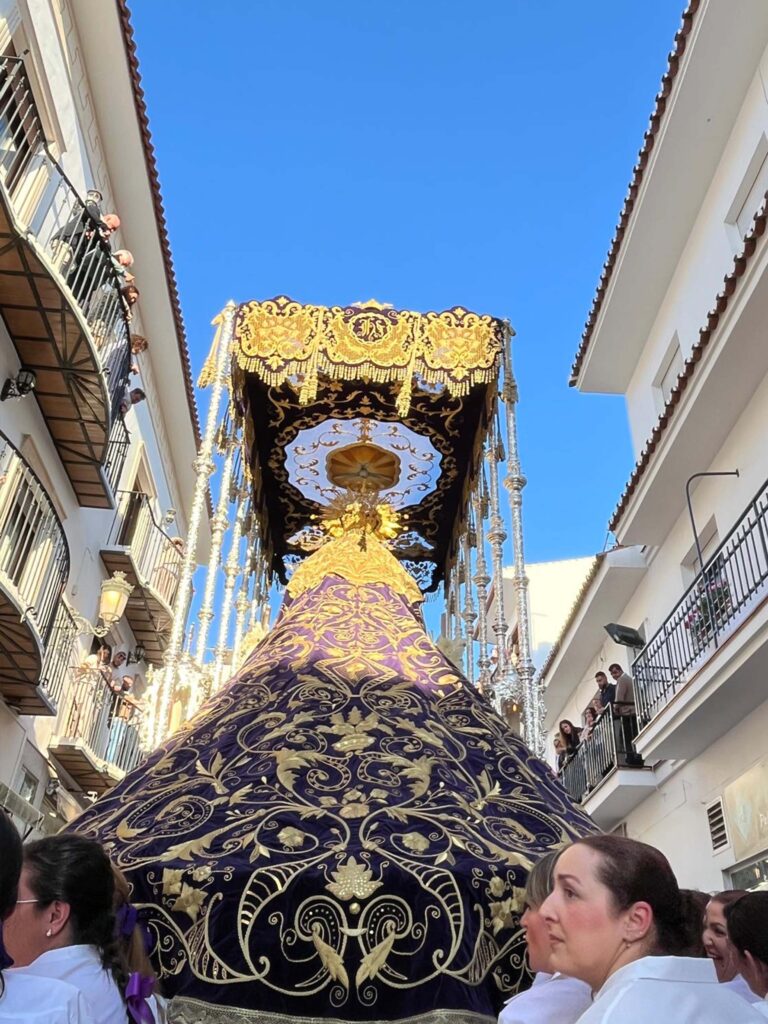
    There are places where Holy Week is observed from a distance. In Alhaurín el Grande, however, you can feel it in the streets, in the atmosphere of the town and in that change of pace that completely transforms your visit.

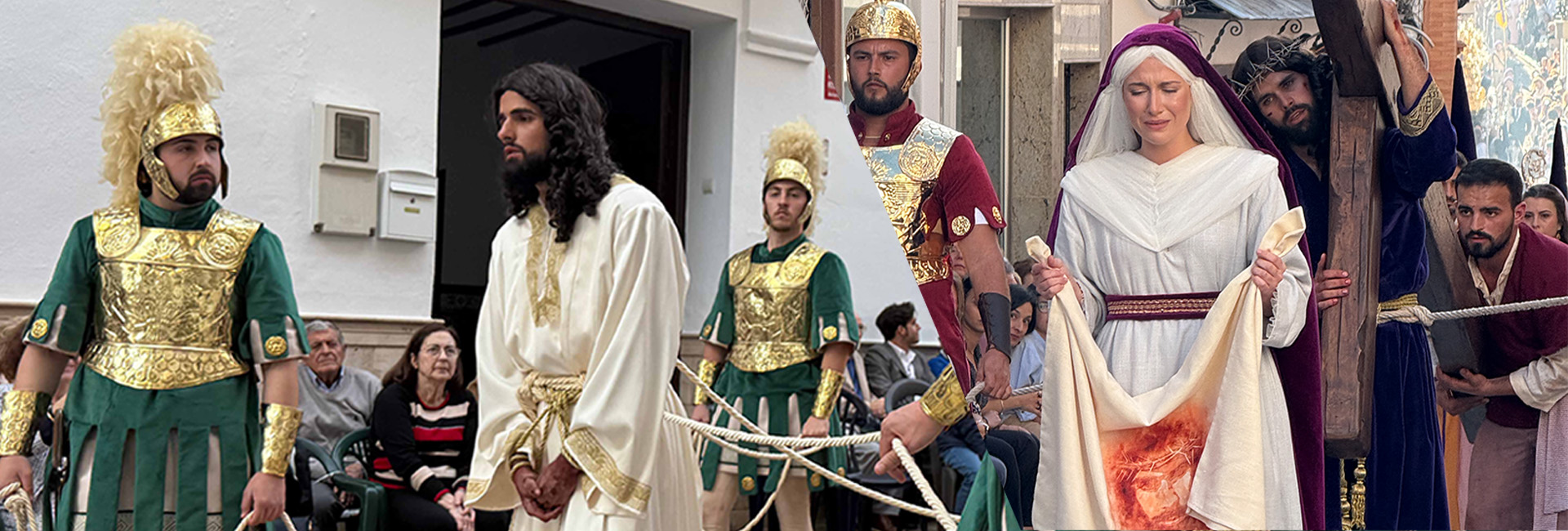
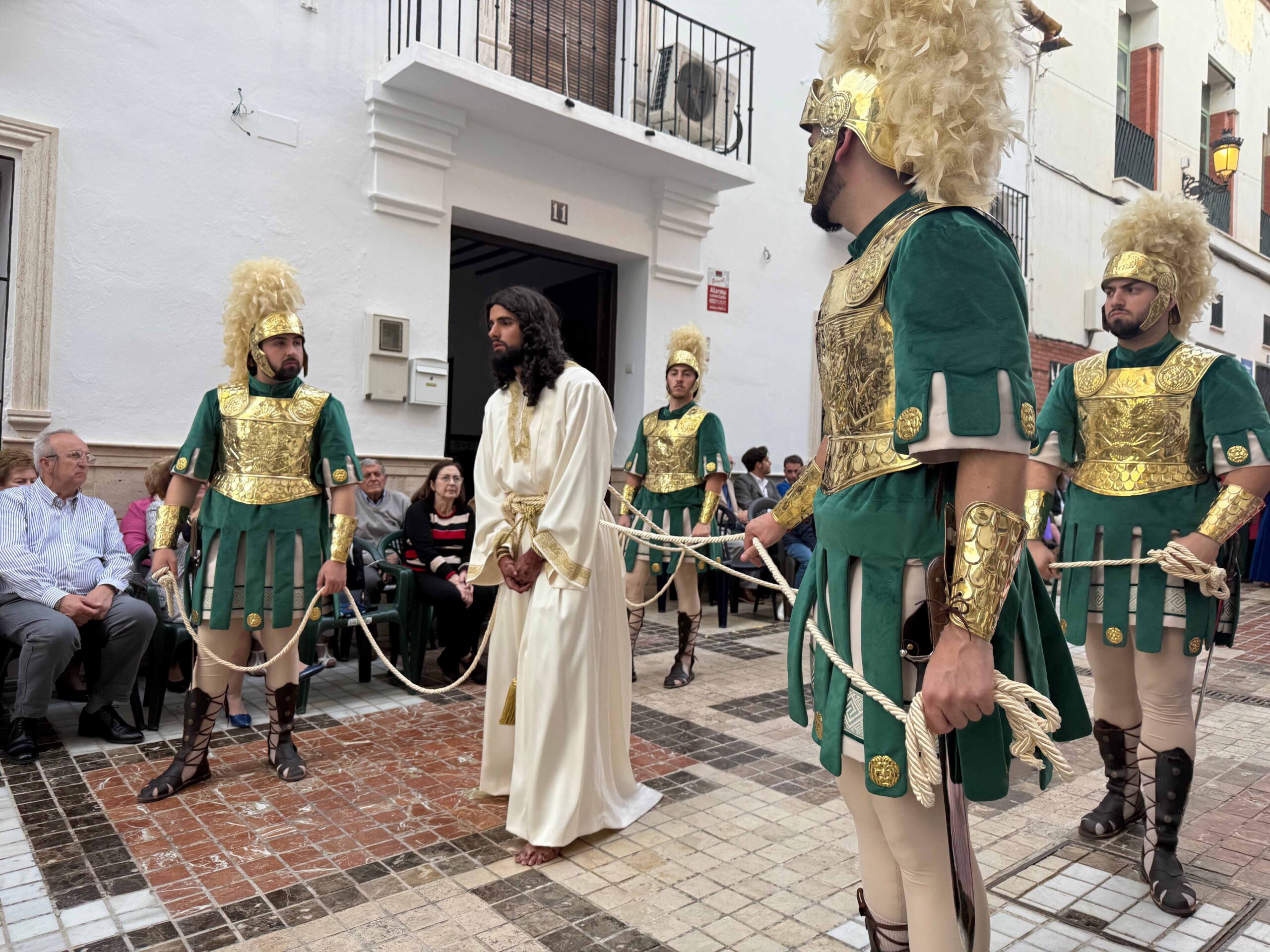
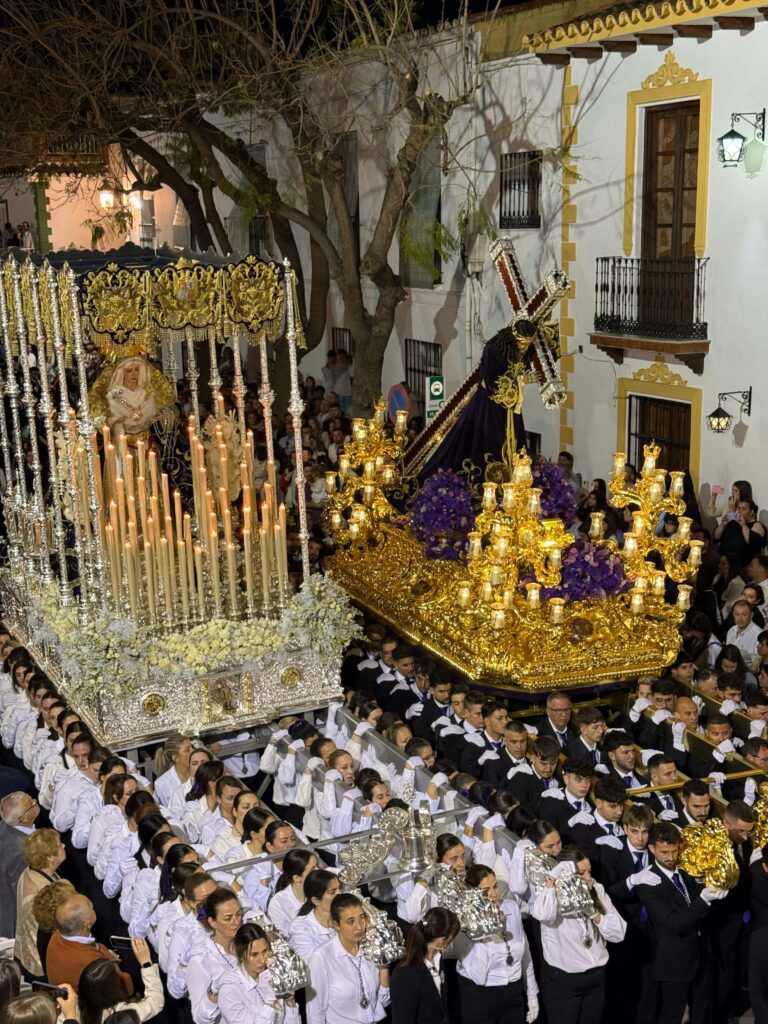
    Designated a Festival of National Tourist Interest in Andalusia, this celebration is not merely a succession of processions. On the contrary, it is a total immersion in tradition, where the value lies not just in watching a float go by, but in everything that happens around it: pre-procession events, live performances, the local atmosphere and a range of culinary delights that round off the experience.

    The Town Council has been promoting Holy Week in Alhaurín el Grande for years (including at FITUR), and in 2026 it will unveil a new official seal and logo. So, if you’re looking for a different kind of getaway in the province of Málaga, away from the crowds on the coast, here’s why Holy Week in Alhaurín el Grande should be on your travel list.

    What makes Holy Week in Alhaurín el Grande unique

    In this regard, if we had to sum up the experience in a simple formula, it would be this: the streets, tradition, devotion and cuisine. Furthermore, there is a historical element that underpins the whole town during these days:

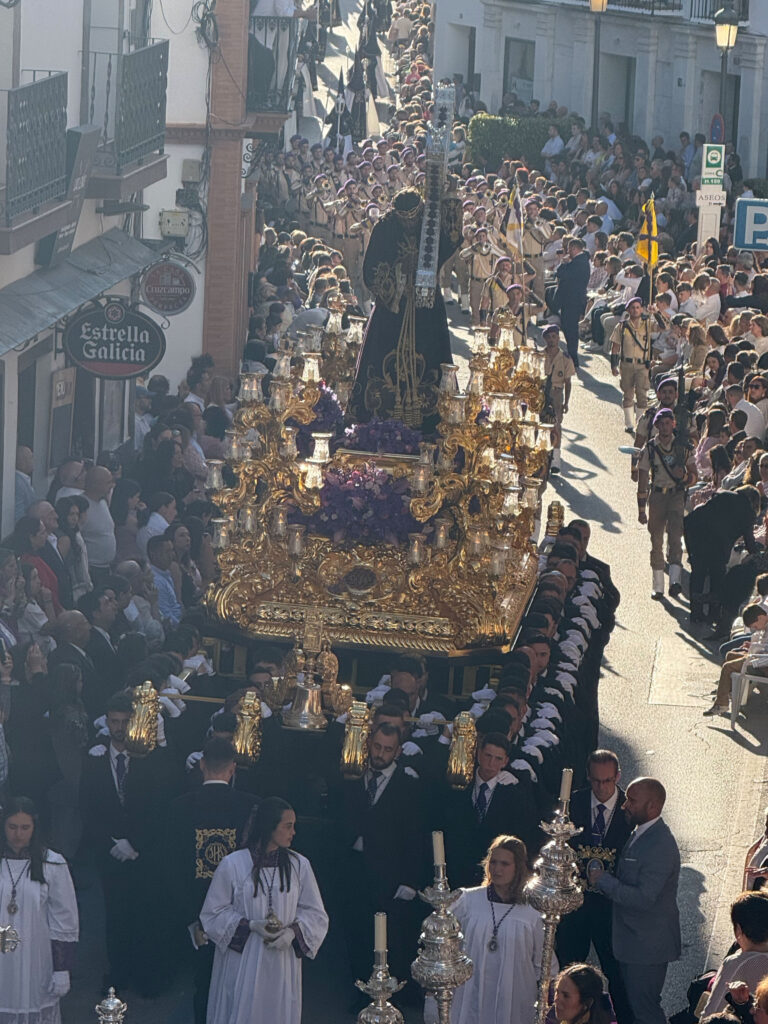
    The most distinctive feature of Holy Week in Alhaurín is that practically the whole town is divided into two major brotherhoods:

    • The Moraos: From the Royal Brotherhood of Our Father Jesus of Nazareth. 
    • The Verdes: From the Brotherhood of the Holy True Cross. 

    Naturally, this means that both brotherhoods strive to their utmost each year to improve their processions, their squads of Roman soldiers and their impressive marching bands.
    Live performances: Open-air theatre on a grand scale

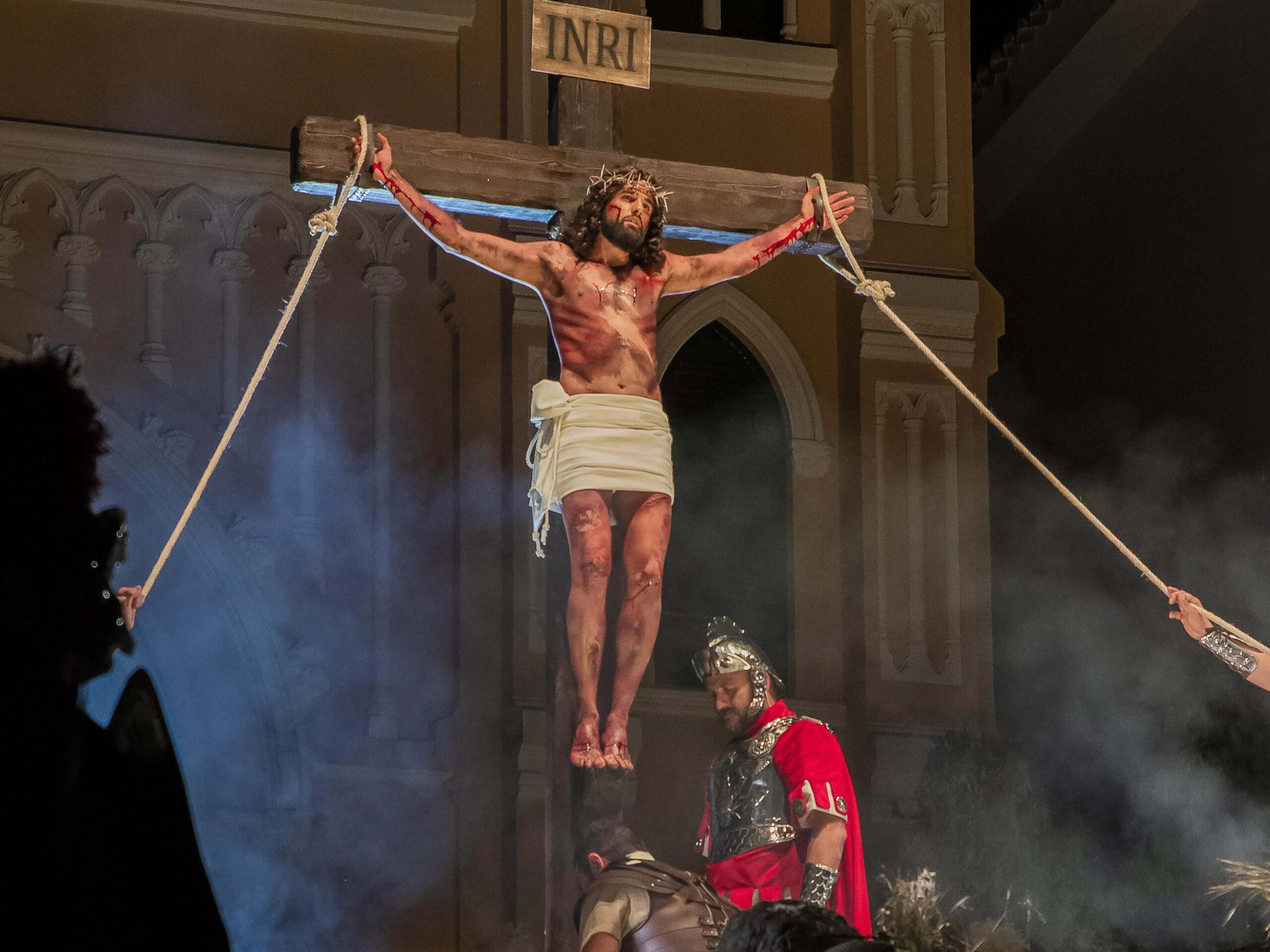
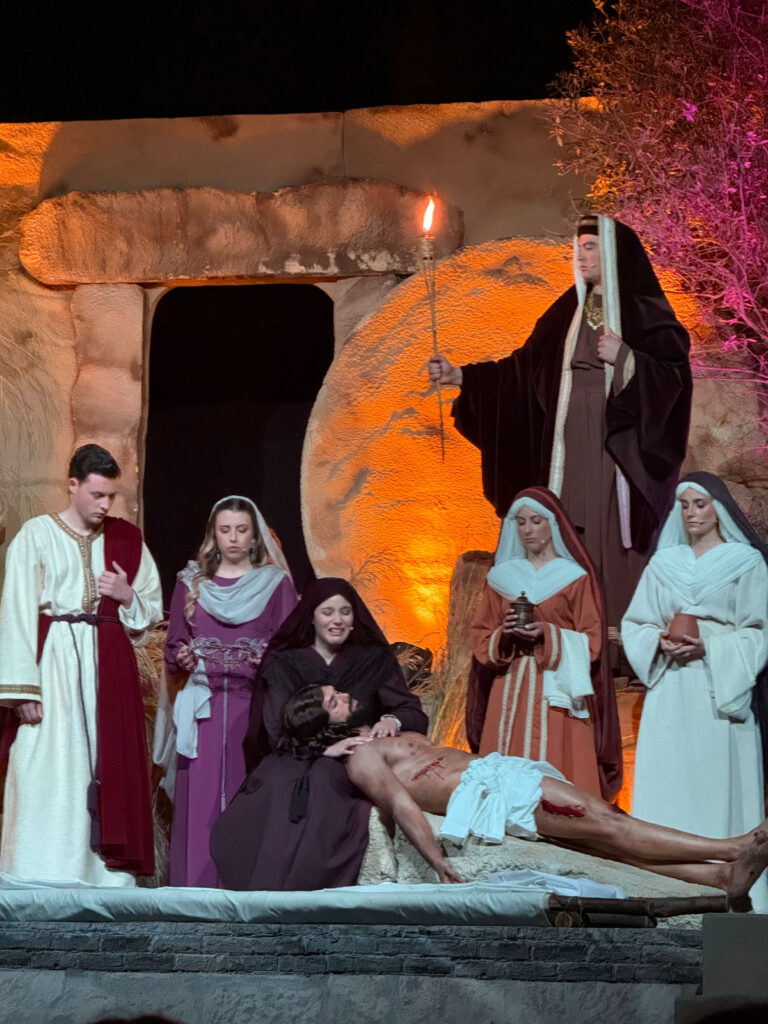
    It’s not all about the processions here. In fact, the town’s squares are transformed into life-size stages. Hundreds of locals re-enact scenes from the Passion of Christ live. As a result, it’s a spectacular, immersive experience; you get to witness a historical play right there in the town’s streets. Tickets are now on sale for the live performances on Maundy Thursday, Good Friday and Holy Saturday. A full pass costs €15. Individual tickets, however, will only be available on the day of each performance.

    🏡 Are you coming to experience Holy Week in Alhaurín el Grande?

    In fact, there are only a few days to go before the big week begins and accommodation is selling out fast. So don’t just settle for a quick visit: stay a while, relax and soak up the local atmosphere from the inside, and make sure you have the perfect getaway.


    Cuisine: Flavours of Holy Week

    This is the detail that many tourists only discover too late. Without a doubt, the cuisine is a cornerstone of this festival. In 2026, the Town Council has once again launched the ‘Flavours of Holy Week’ initiative, a programme focusing on Lenten dishes and traditional sweets typical of this time of year, available in local restaurants and bakeries. What’s more, strolling through the town centre, watching the streets fill up and sitting down to sample the local cuisine makes for a truly complete experience. 

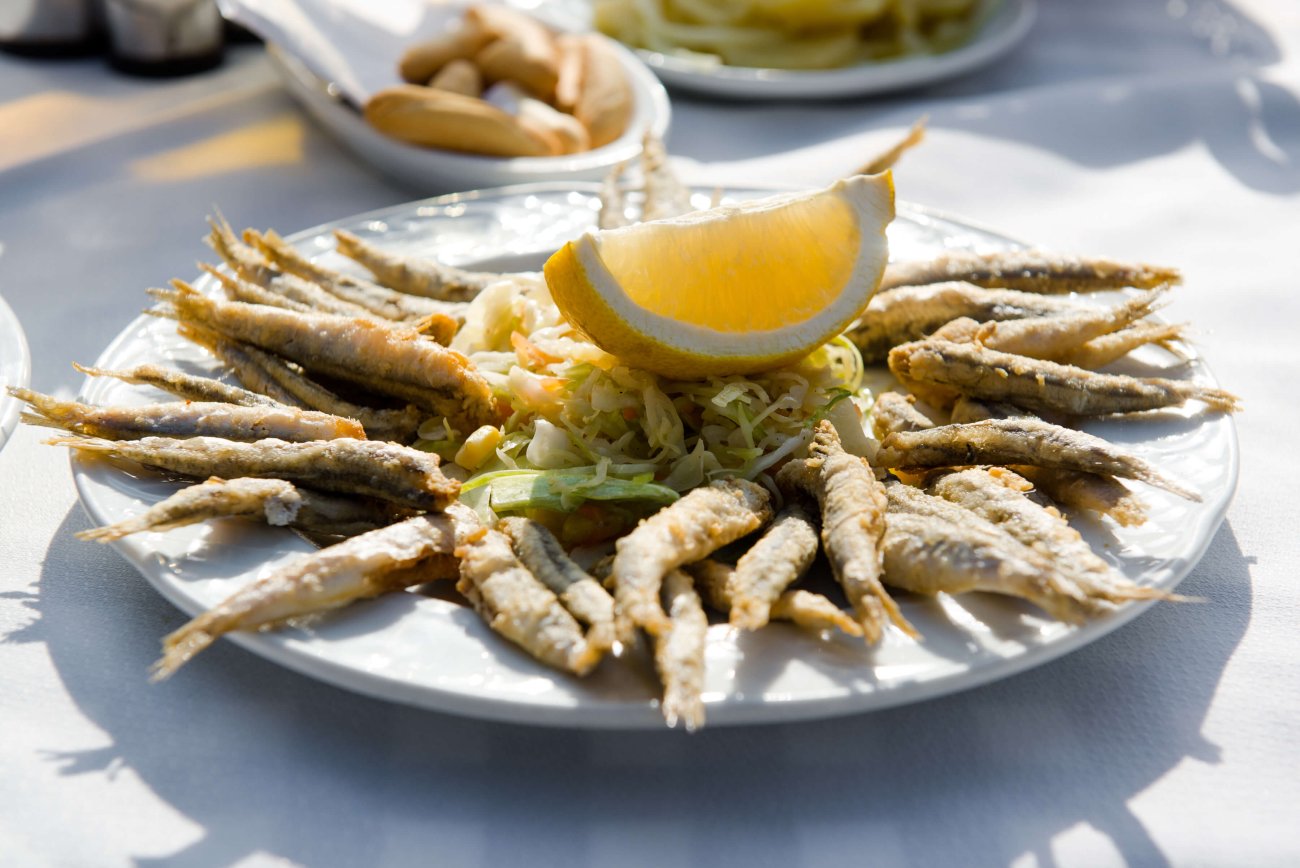
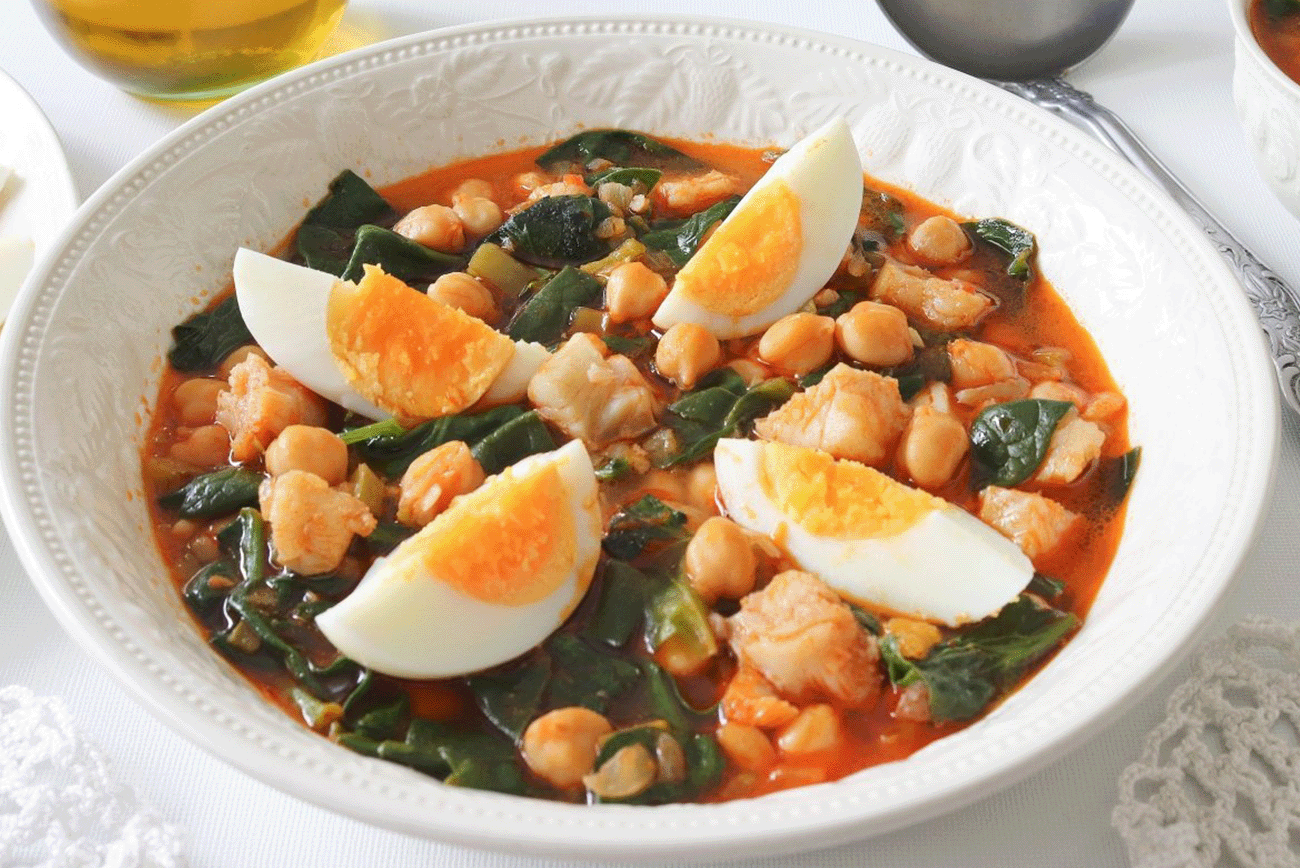
    For example, I’d recommend trying torrijas, bollos de aceite and roscos when it comes to pastries. Specifically, here are some patisseries where you can try these delicacies: Carnero, El Colmenero, Guzmán, El Rubio and Tita Gracia. Likewise, to enjoy the pre-Lent dishes featuring cod and other fish, head to: Restaurante La Arquilla, Restaurante Carolina, Tapería Casa de la Abuela, Restaurante La Lonja de la Alegría and Venta la Recta.

    Key dates for Holy Week 2026

    Make a note of the key dates in your diary so you can plan your accommodation and travel arrangements:

    • Palm Sunday (29 March): To begin with, the Palm Sunday Procession and Solemn Mass.
    • Holy Wednesday (1 April): In the convent courtyard, re-enactments of various biblical scenes, notably The Last Supper. 
    • Maundy Thursday (2 April): The day begins with a Holy Mass of the Lord’s Supper at the parish church. At 6.15 pm, the Procession of María Santísima de la Soledad. Then, in the late afternoon and early evening, the arrival and reception of the National Police Force. This is followed by a live re-enactment of several scenes from the Passion in the Plaza Nueva, notably the Trial of Jesus before the Sanhedrin and the Trial of Jesus before Pilate (Part I). Finally, the processional departure of Our Father Jesus of Nazareth, dressed as a captive.
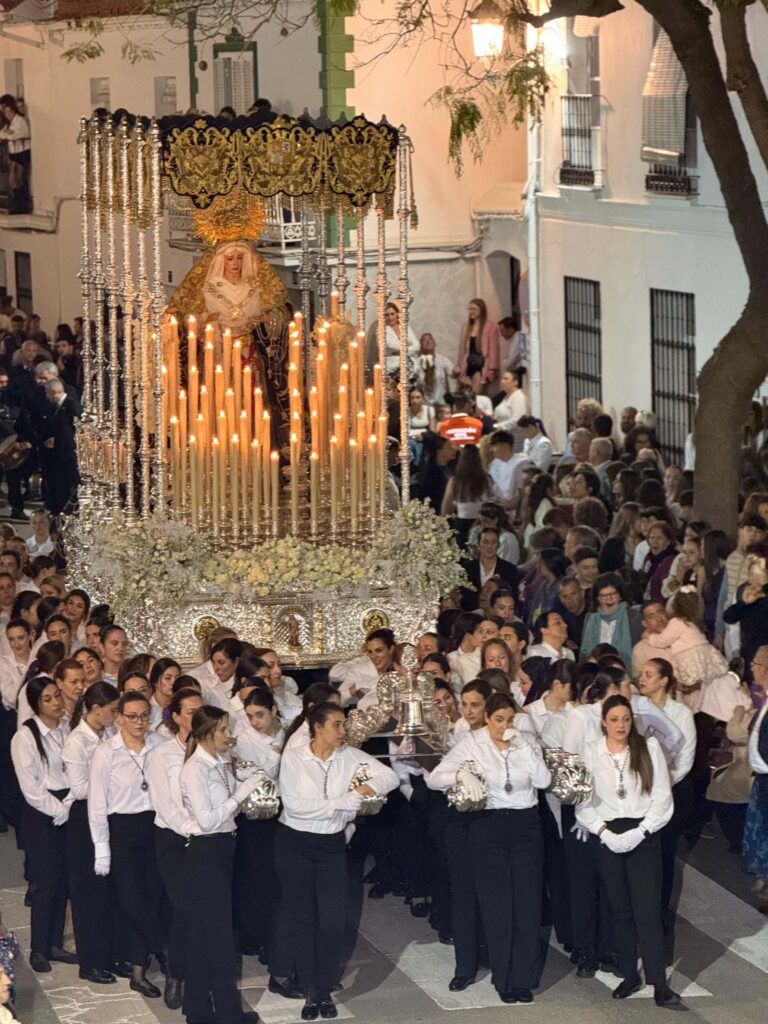
    • Good Friday (3 April): At 12.00, the Celebration of the Lord’s Passion in the parish church. At 5.30 pm, a live re-enactment of various scenes from the Passion: Jesus’s trial before Pilate (Part II), and his sentencing to death and the handing over of the cross. At 6.15 pm, the Solemn Processional Departure of Our Father Jesus of Nazareth and Our Lady of Sorrows, accompanied by a live re-enactment of further scenes from the Passion (The Three Falls). From 9.15 pm in the Plaza del Convento: dramatisations of various scenes (the Crucifixion, Death, Descent from the Cross and Burial of Christ), followed by the Solemn Procession of the Holy Burial of Christ. 
    • Holy Saturday (4 April): The day begins with the Condolences to the Virgin. Then, in the evening, the Easter Vigil and, finally, in the Plaza Nueva and the convent courtyard, the live re-enactment of the Resurrection of Our Lord Jesus Christ.
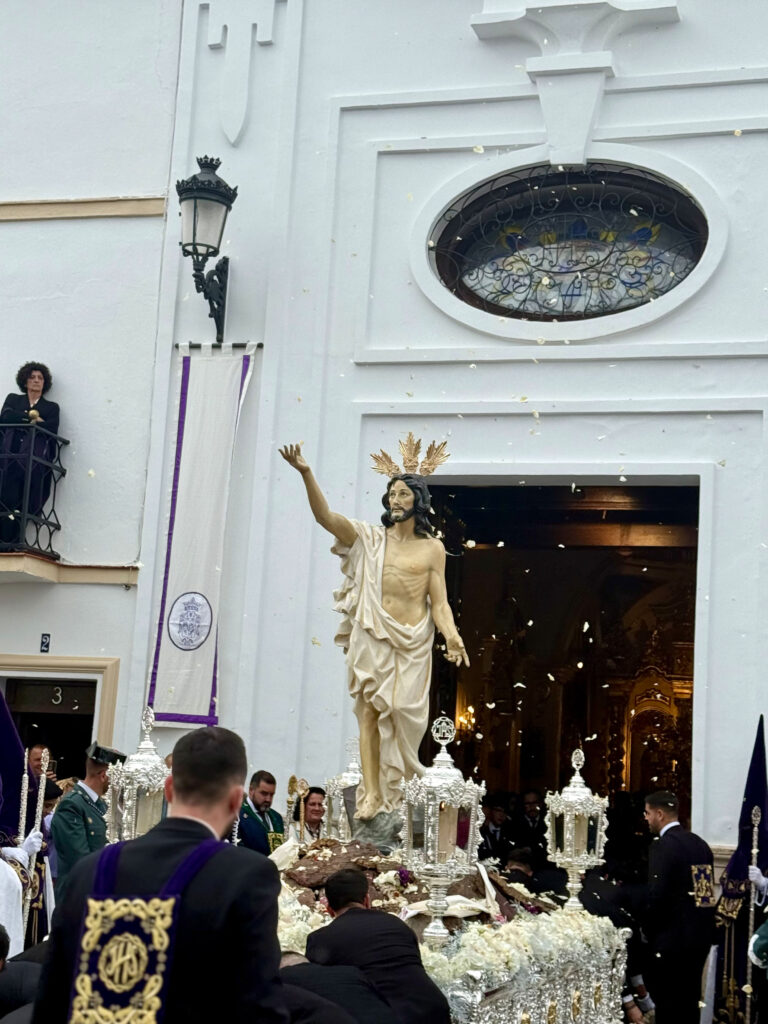
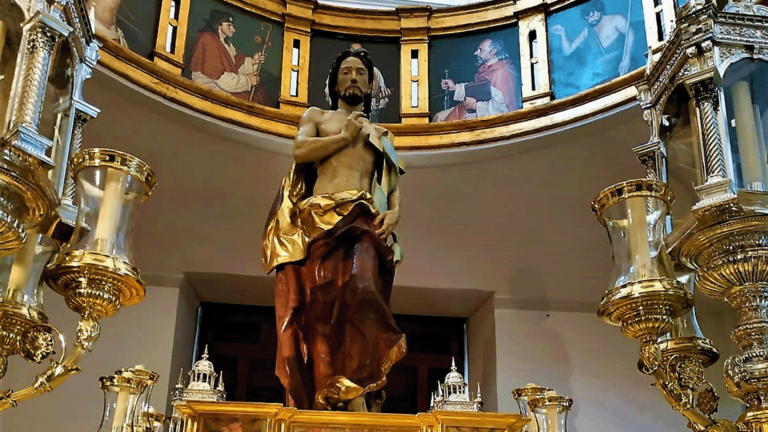
    • Easter Sunday (5 April): This is, in short, the grand finale of Holy Week. At 12.00 there is the Solemn Eucharist of Easter Sunday and at 13.00 the Processional Departure of Our Father Jesus the Risen One.
        •  

    How to organise your visit

    1. Allow plenty of time: Generally, the most common mistake visitors make is rushing in and out on the same day just to see a specific float. Set aside at least one full day or, better still, stay overnight in the area. That way, you won’t be tied to a single procession and you’ll be able to soak up the town’s true atmosphere.
    2. Check the official programme: Each year’s event has its own timetable. In addition, the Town Council publishes the official programme with the routes of the performances and processions.
    3. Keep the Tourist Office details to hand: If you have any queries, the Tourism Department offers visitor assistance.
    4. Locate the starting points and routes: Firstly, bear in mind that the processions of Los Verdes begin their route from the Convent, whilst those of Los Moraos set off from the Chapel. Furthermore, all the brotherhoods follow a central route through the town. Their processions pass through main streets such as Plaza Alta, Calle Cruz, Calle Real, Las 4 Esquinas and Calle San Sebastián. Consequently, finding a spot on these streets is a sure-fire way to enjoy watching the floats go by.

    Who is this destination for?

    Holy Week in Alhaurín el Grande is perfect for travellers seeking a village with a genuine atmosphere rather than just a ‘backdrop’ for photos. Above all, it’s ideal for those looking to combine tradition and fine cuisine on a spring break with its own unique character, far from the hectic pace of the coast.

    In short, if you’re looking for an experience with character and streets full of life, Alhaurín el Grande is definitely worth a spot on your calendar. And remember: the best way to experience it isn’t to rush in, but to stay a while, have a stroll and feel like just another local.

    👇 Have you got everything sorted for your trip?

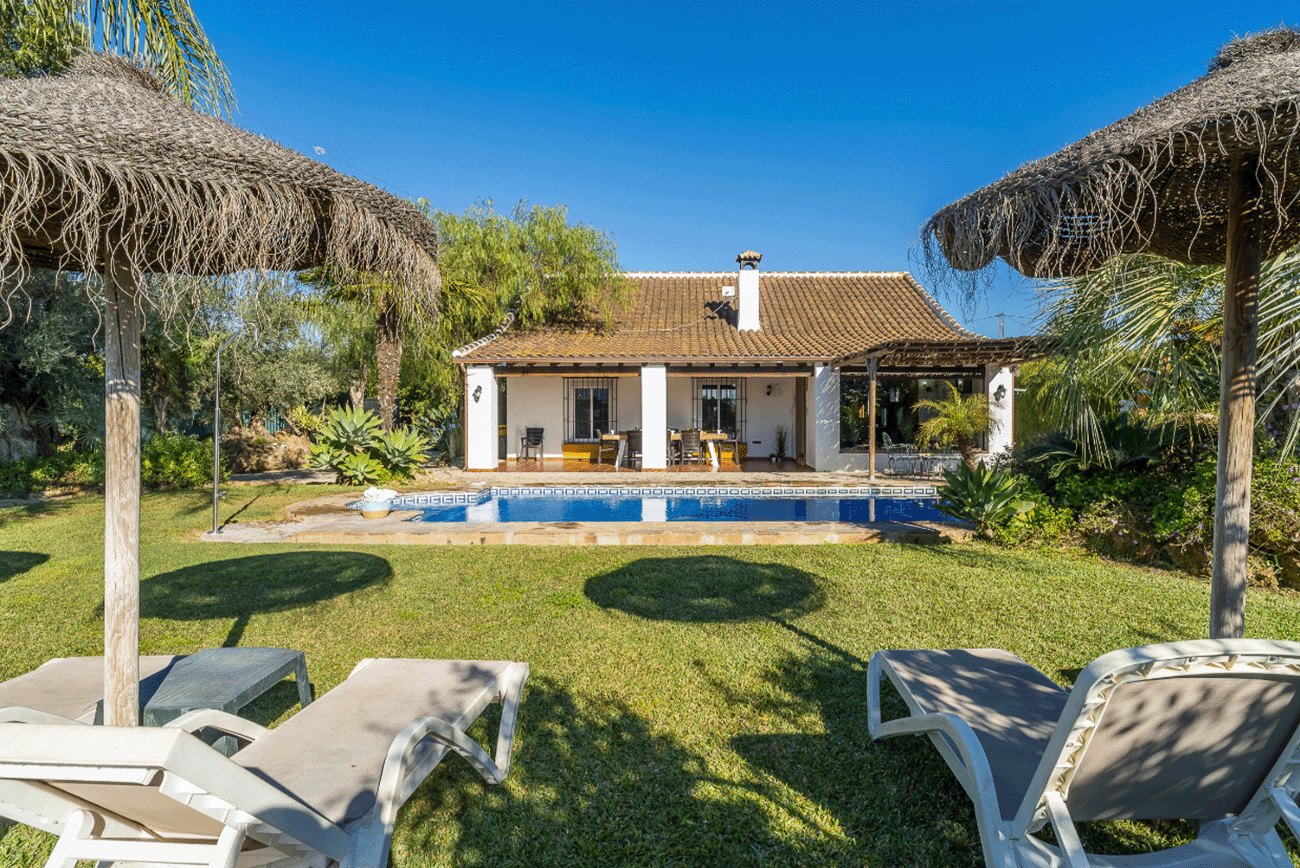
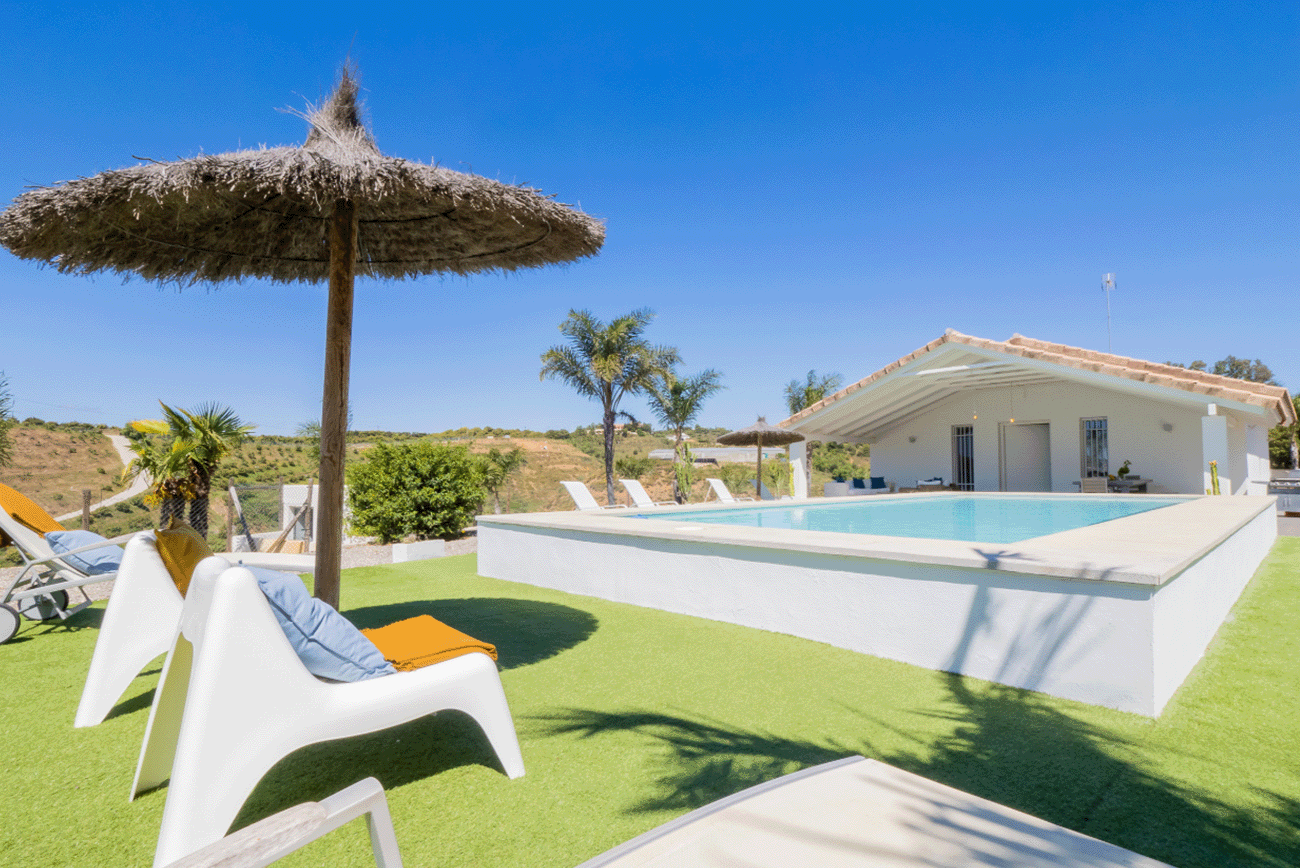
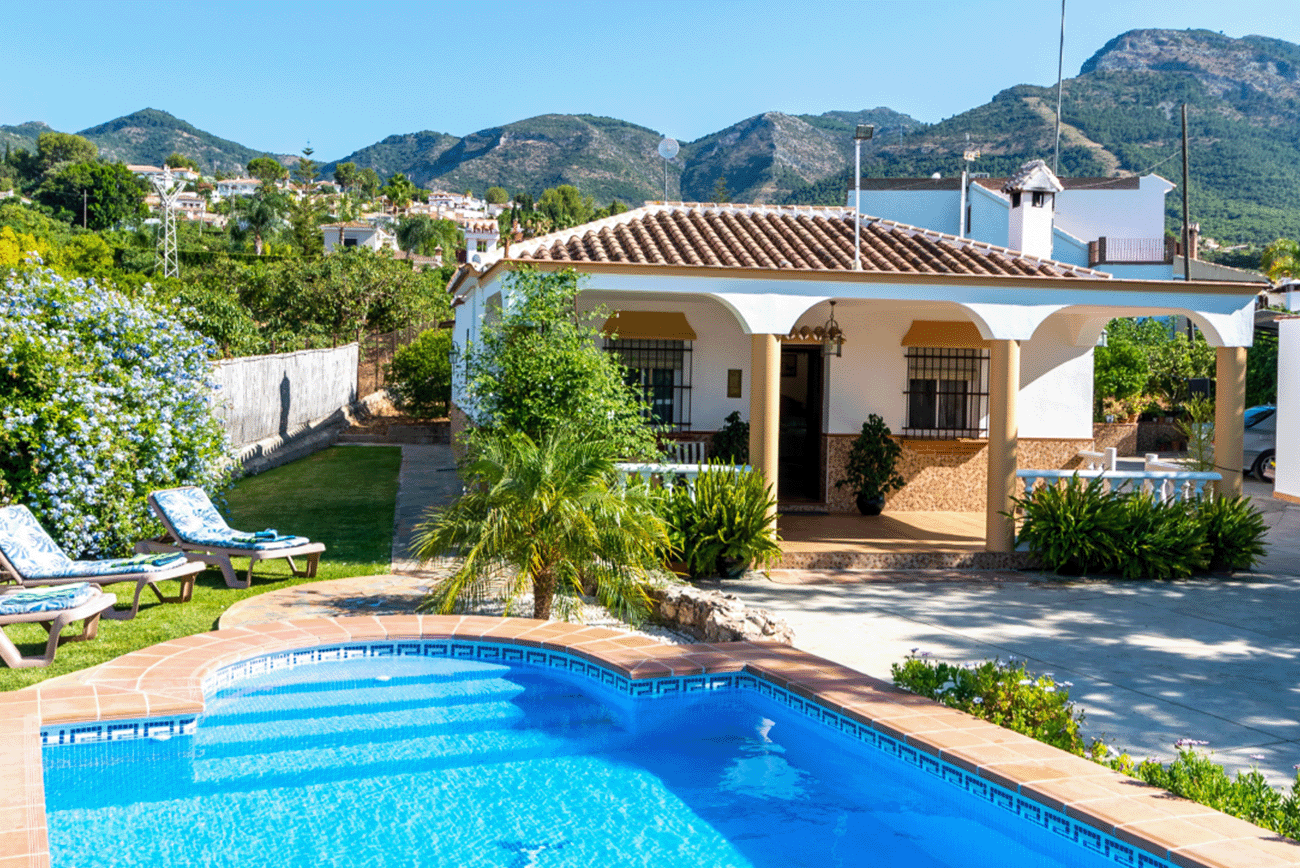
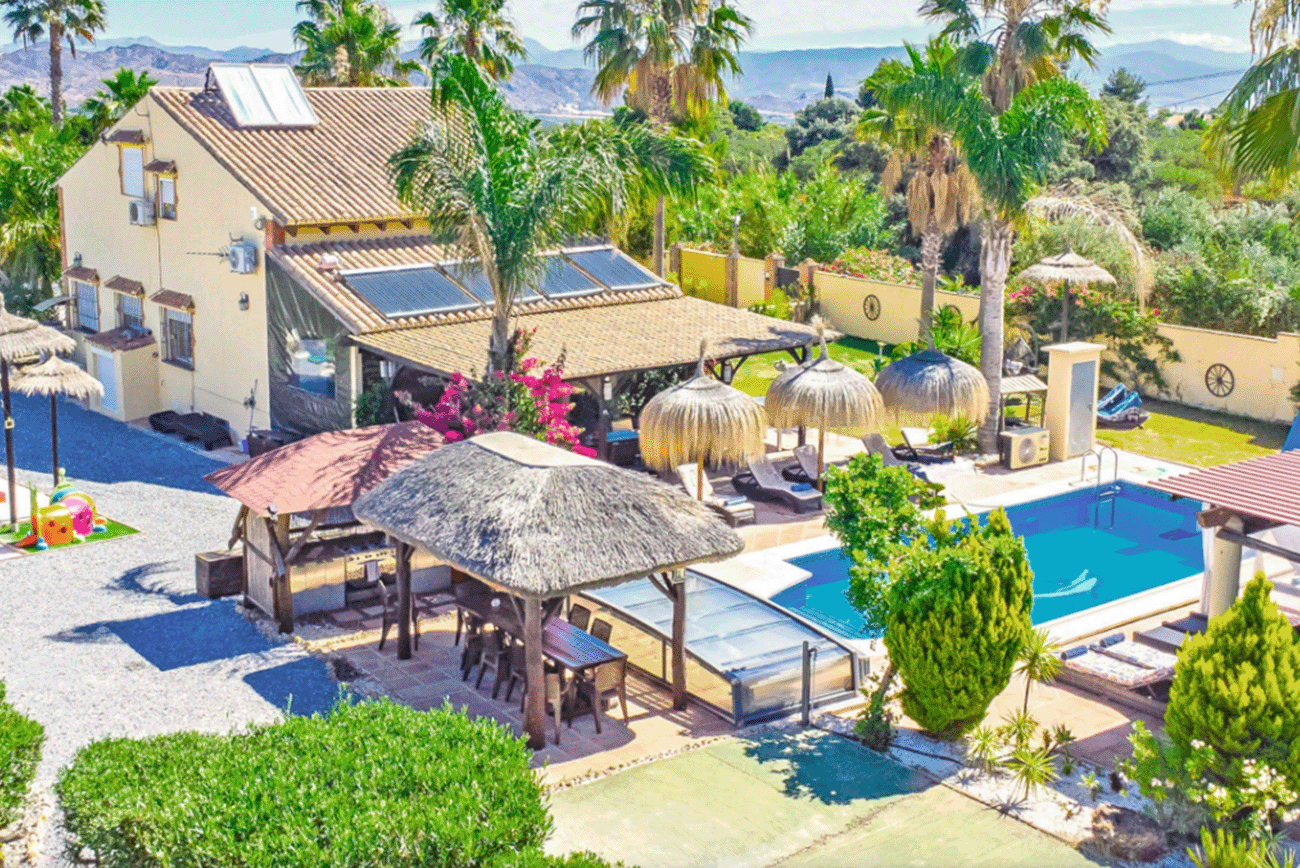
    In fact, our headquarters are right here in Alhaurín el Grande, and we know every corner of the Guadalhorce Valley. What’s more, we have the best properties so that, after a day packed with excitement, you can relax in your own home with a swimming pool, terrace and all the comforts you need.

  • How to make a holiday home in Málaga profitable: key takeaways from the Cubo’s Holiday Homes event in Cerralba

    How to make a holiday home in Málaga profitable: key takeaways from the Cubo’s Holiday Homes event in Cerralba

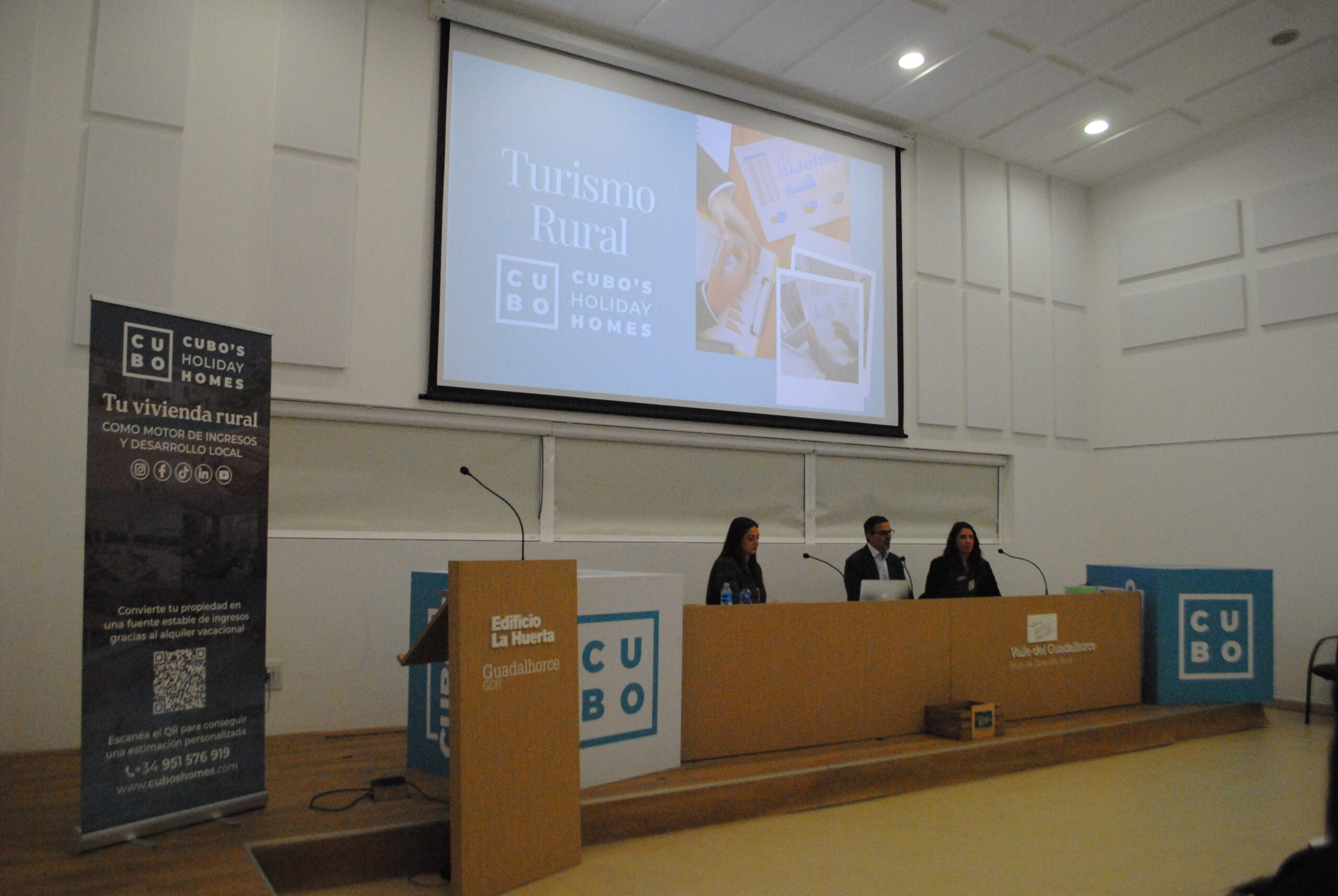
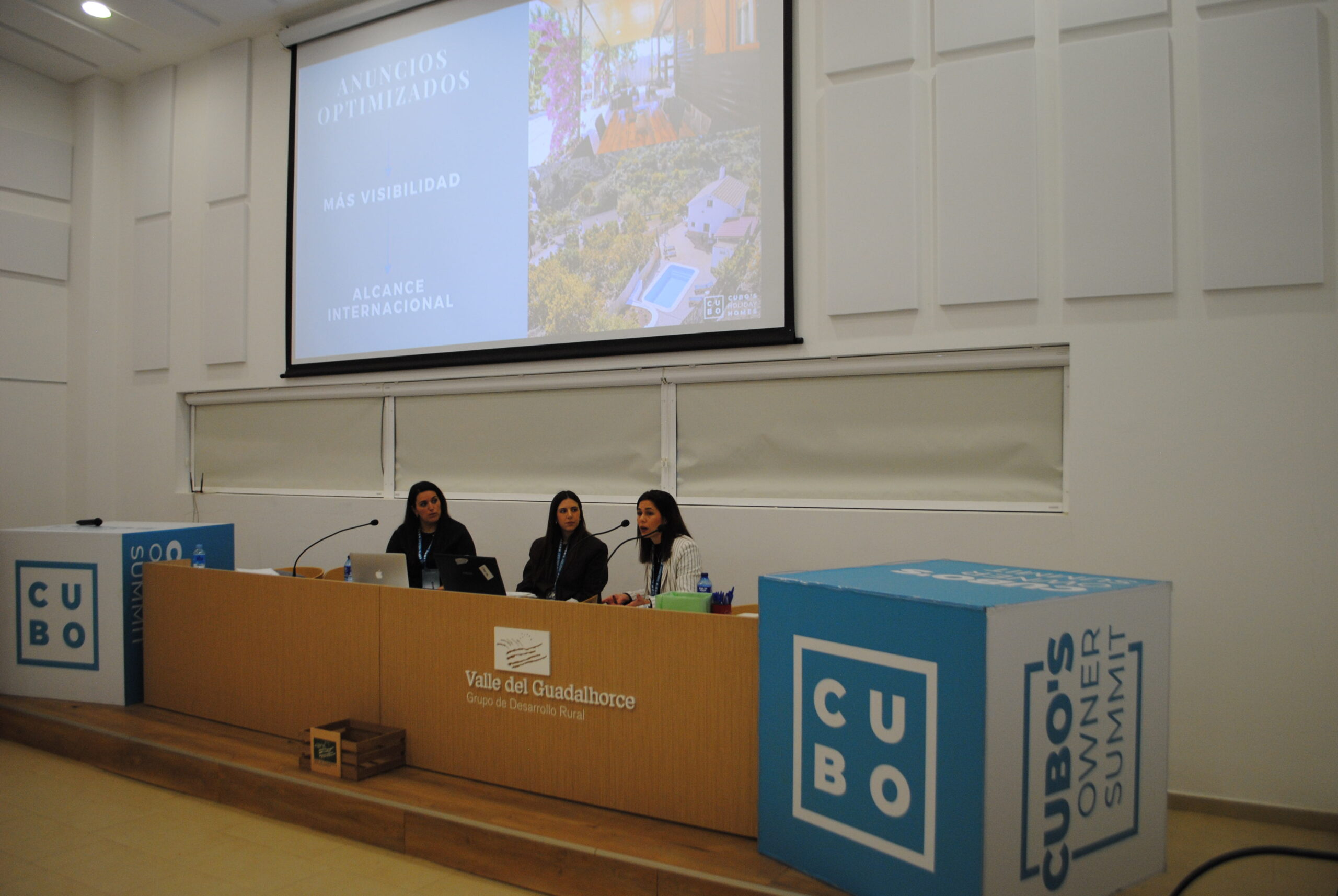
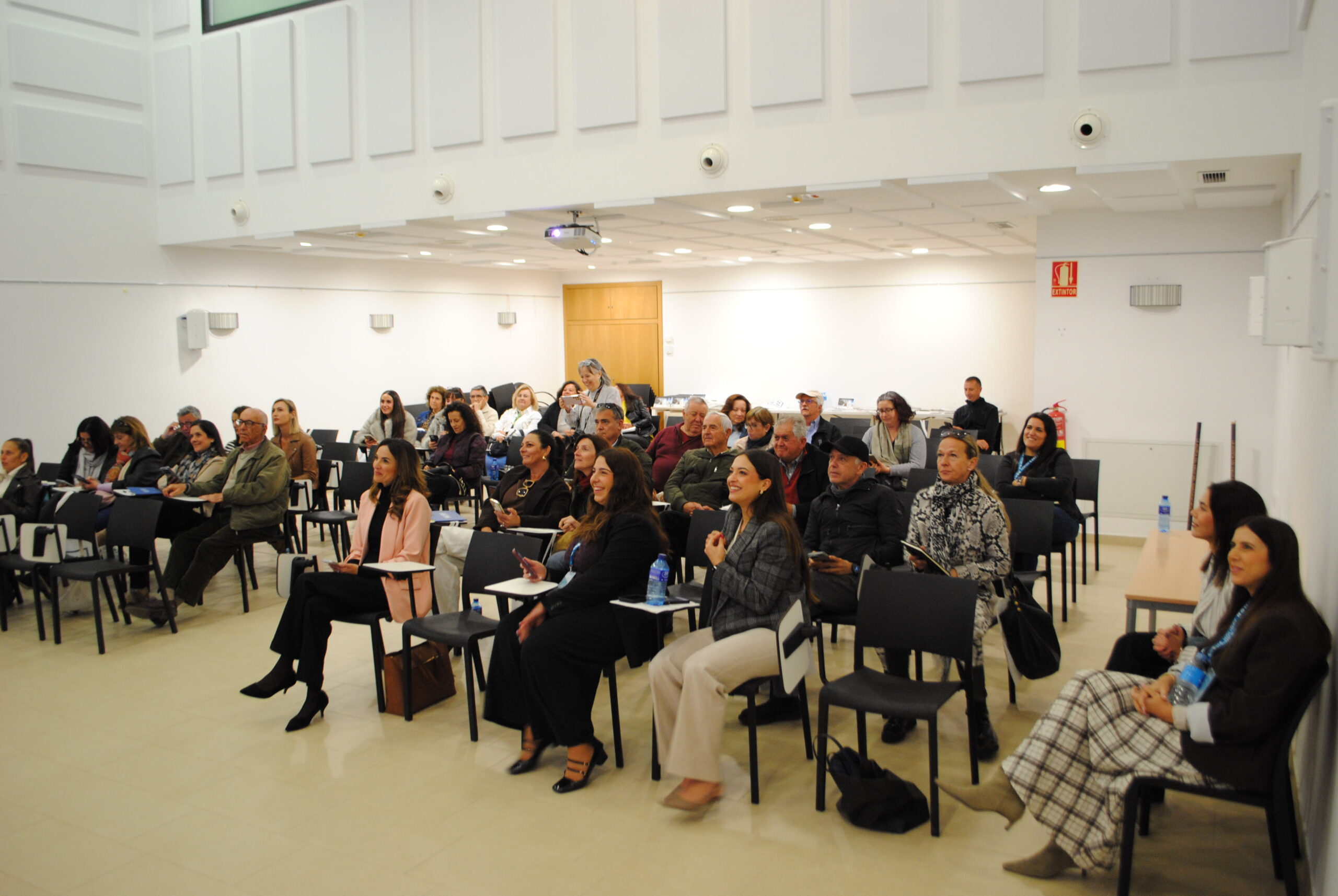
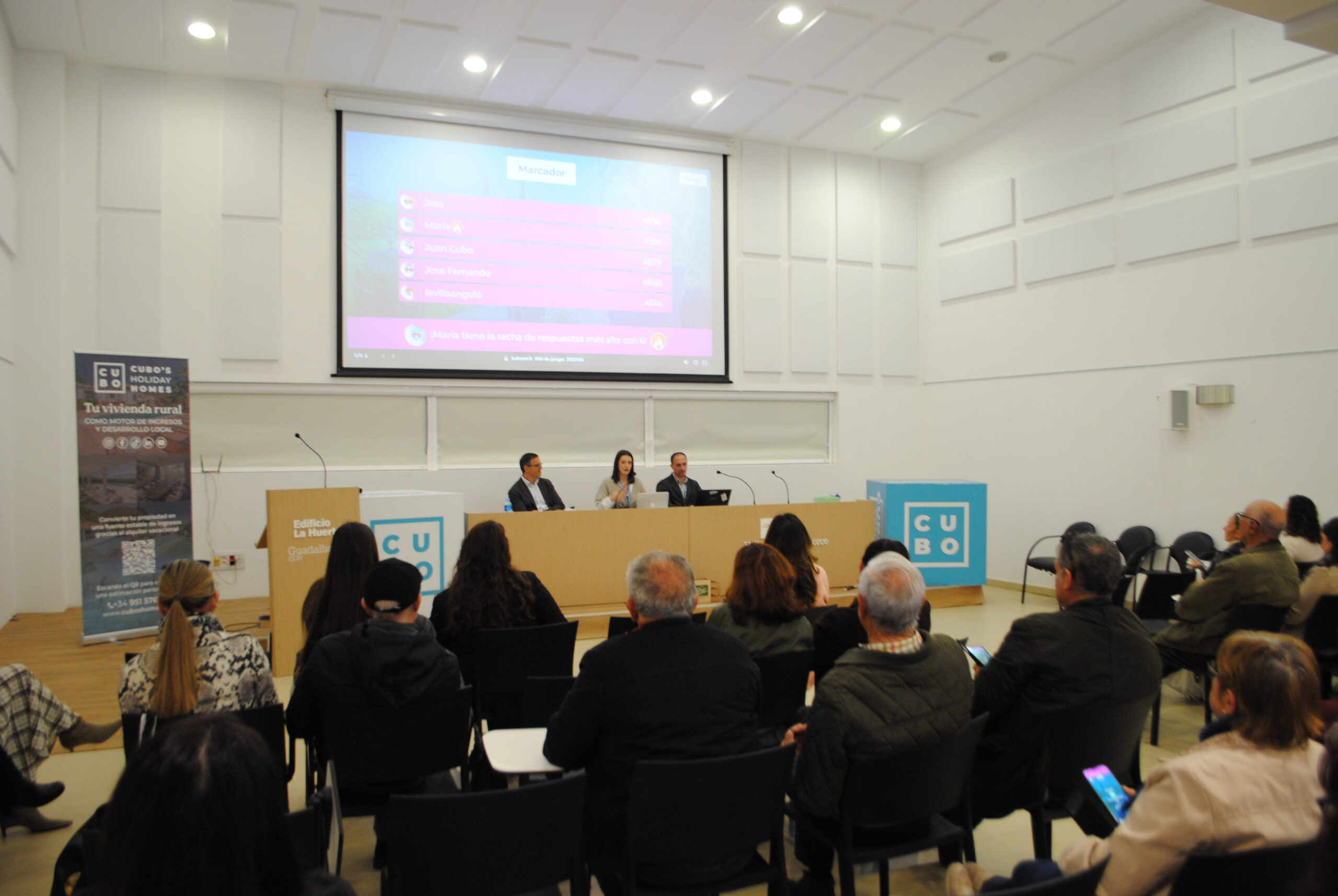
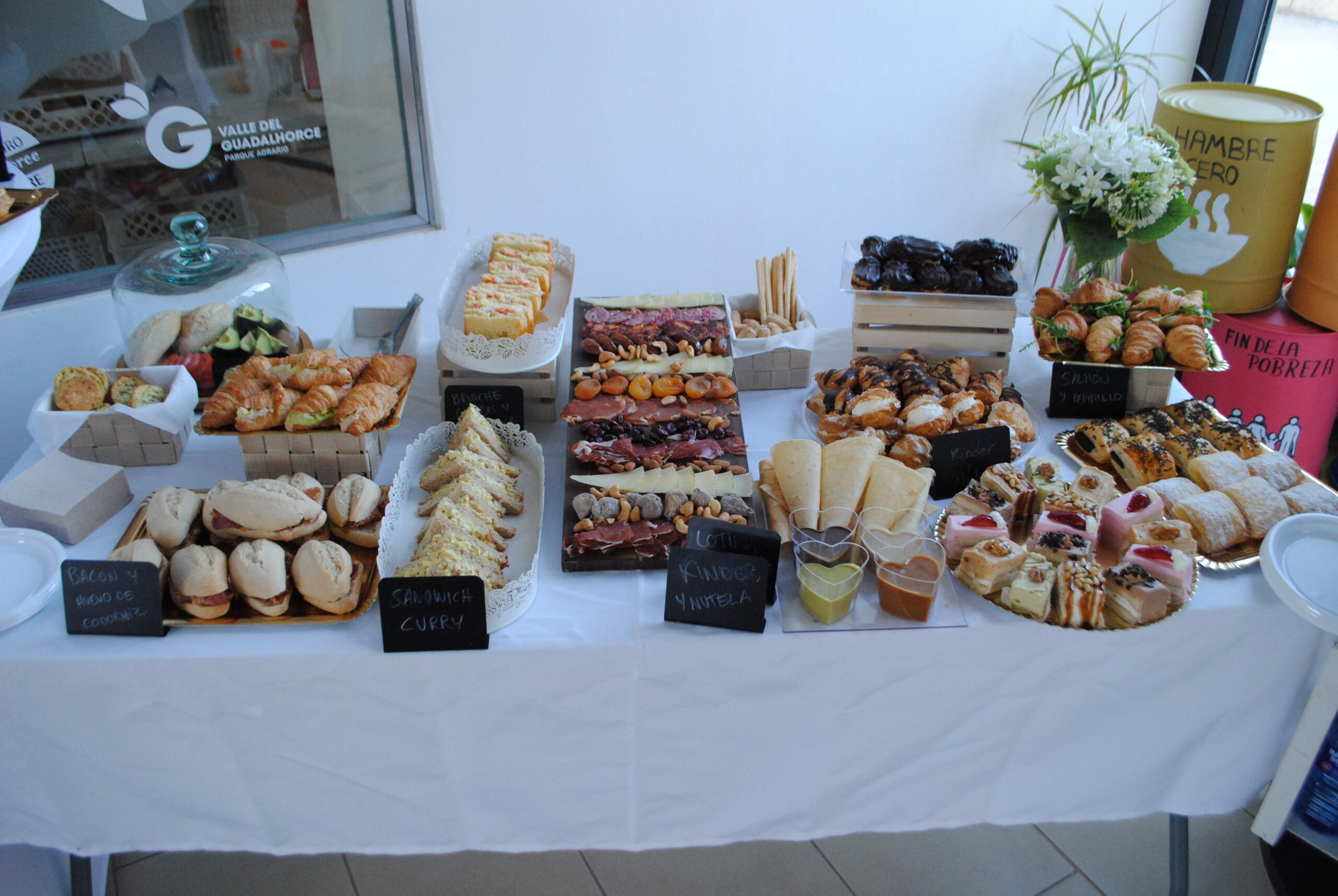
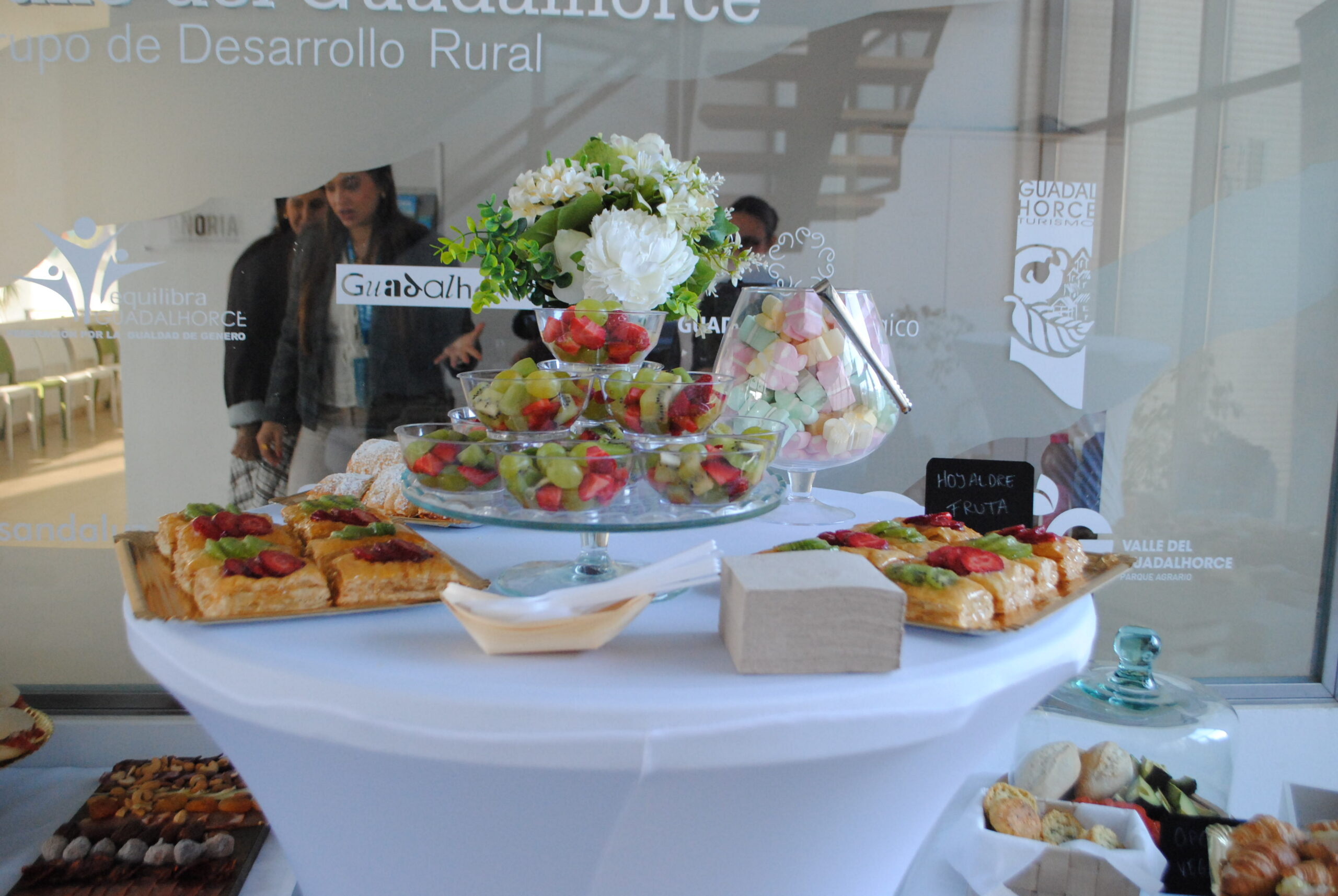
    Last week, we brought together owners of rural holiday homes, industry professionals and tourism experts in Cerralba (Pizarra). The aim was clear: to explain how a rural holiday home in Málaga can become a stable source of income when managed professionally.

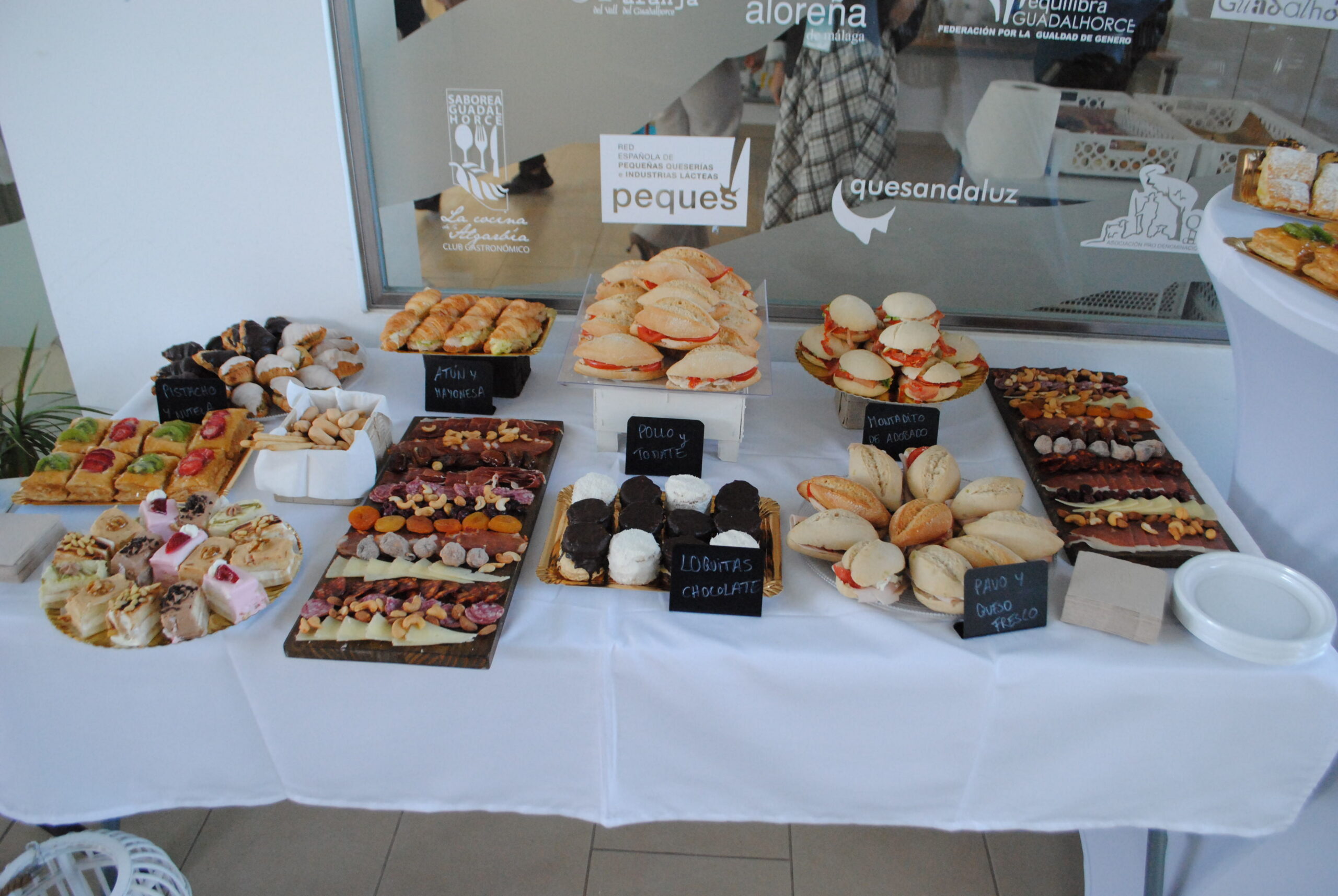
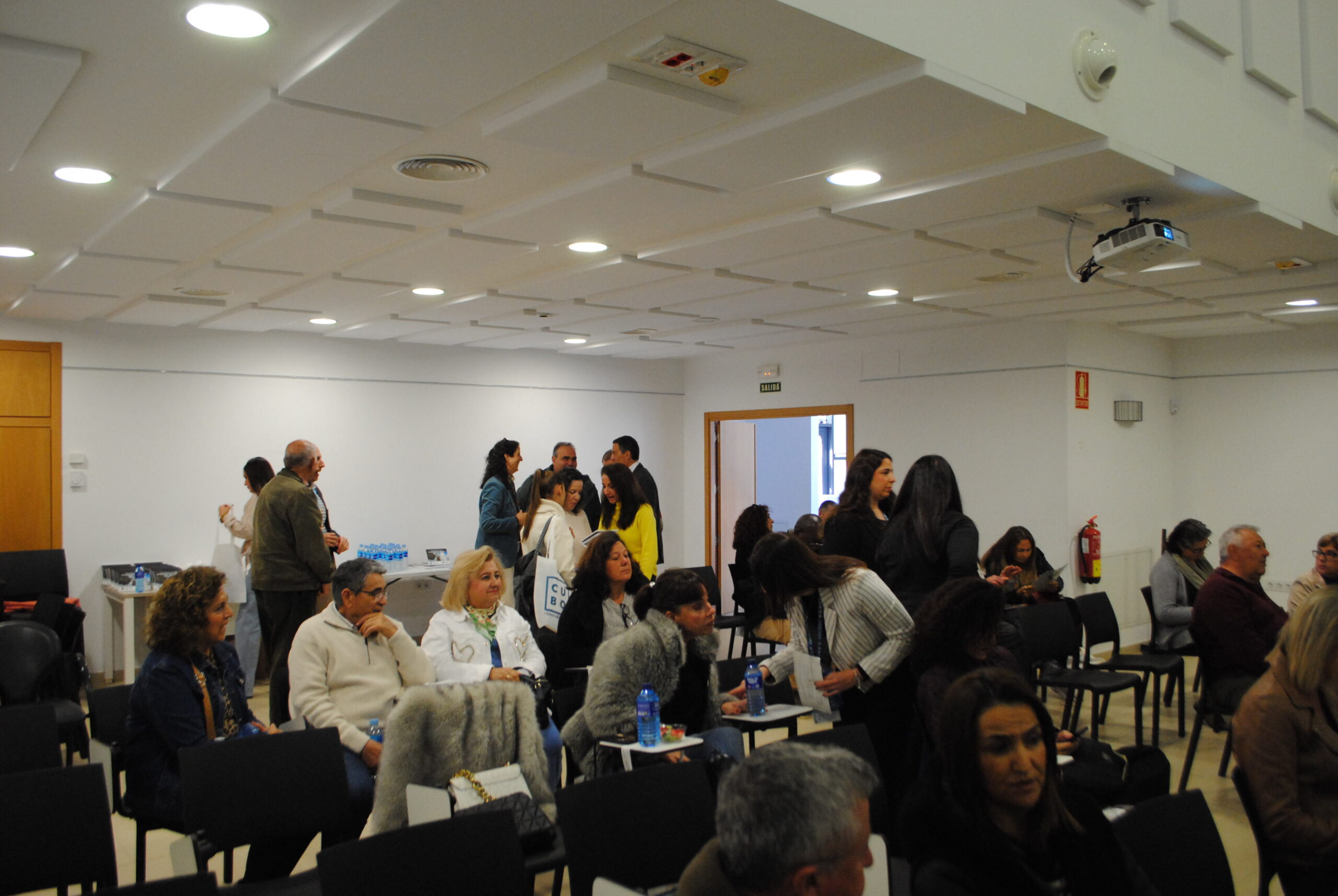
    The event, organised by Cubo’s Holiday Homes, took place at the Edificio La Huerta, the headquarters of the Guadalhorce Valley Rural Development Group. The day began with a varied and carefully prepared breakfast. This provided an opportunity for attendees to discuss the current state of rural tourism in the area. This was followed by a morning packed with ideas, data and useful strategies for property owners.

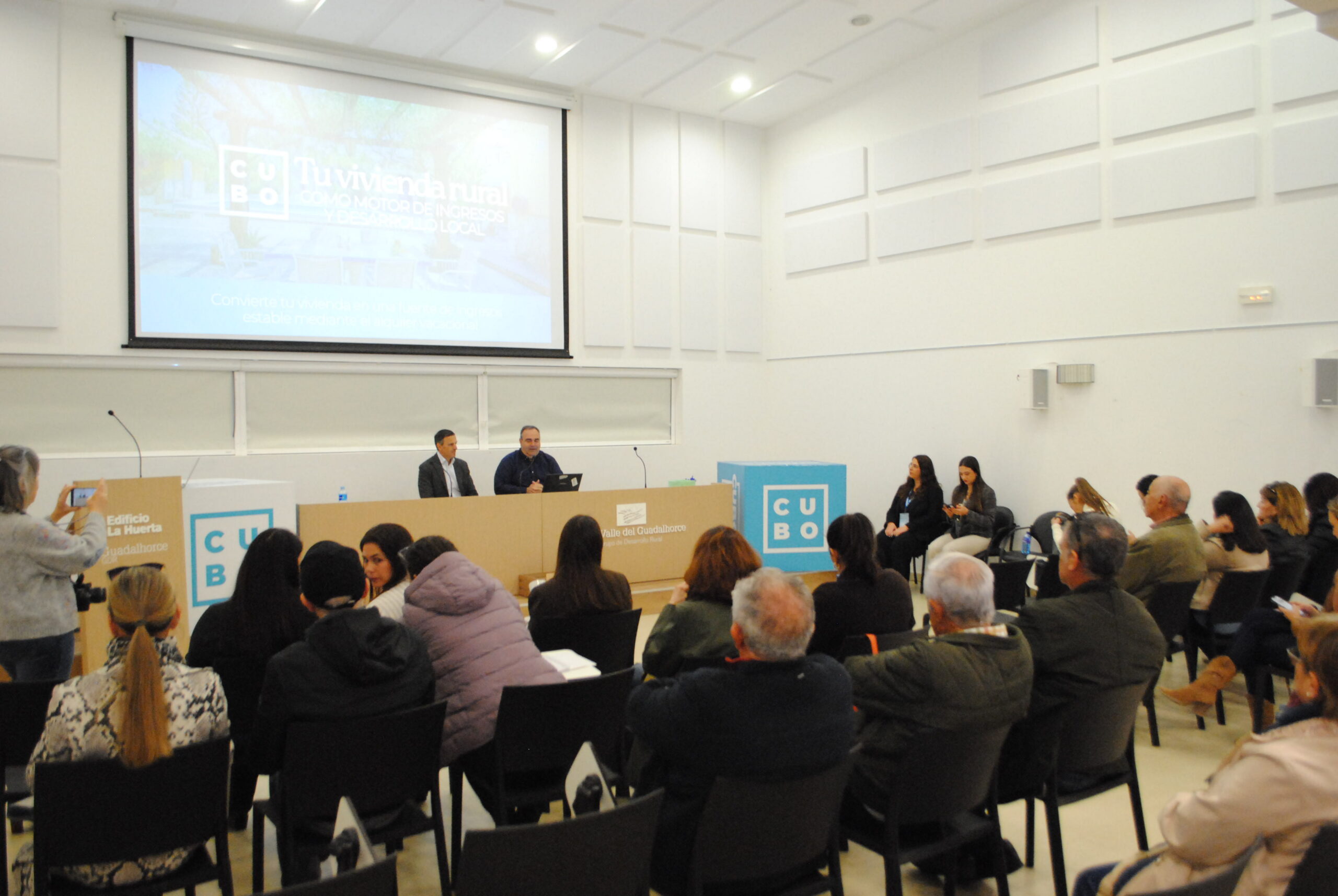
    Following this initial get-together amongst the attendees, we moved to the auditorium to begin the presentations. There, we shared real-world data, management tools and strategies. In fact, these are already being successfully applied by over 400 property owners who work exclusively with us.

    Why more and more property owners are opting for rural holiday rentals

    Rural tourism in the province of Málaga is experiencing a period of significant growth, particularly in areas such as the Guadalhorce Valley and the Sierra de las Nieves. There, an increasing number of travellers are seeking nature, tranquillity and self-catering accommodation. As a result, many rural properties have become a genuine opportunity to generate income all year round. However, the difference between a property that receives few bookings and one that achieves high occupancy usually lies in the management strategy, visibility on booking platforms, pricing and the guest experience. Indeed, these were some of the key topics covered at the event.

    Presentations at the event: strategies for improving the profitability of a rural holiday home

    Félix Lozano, the mayor of Pizarra, opened the event and welcomed us. We are extremely grateful for his presence and support for the sector. In his speech, he spoke of the key role played by tourism in the region and how it has been transforming the local economy in recent years. This was followed by presentations from various professionals.

    The impact of rural tourism on the region

    Juan Cubo, CEO & Founder of Cubo’s Holiday Homes, opened the series of presentations by analysing the evolution of rural tourism in the province of Málaga and the profile of today’s traveller. During his presentation, he explained how booking habits, average visitor spend and the growing demand for rural accommodation in the interior of the province have changed. He also highlighted the role of holiday rentals as an economic driver for the villages of the Guadalhorce Valley. In this way, it helps to create jobs, retain the local population and boost local trade.

    Online visibility and guest experience

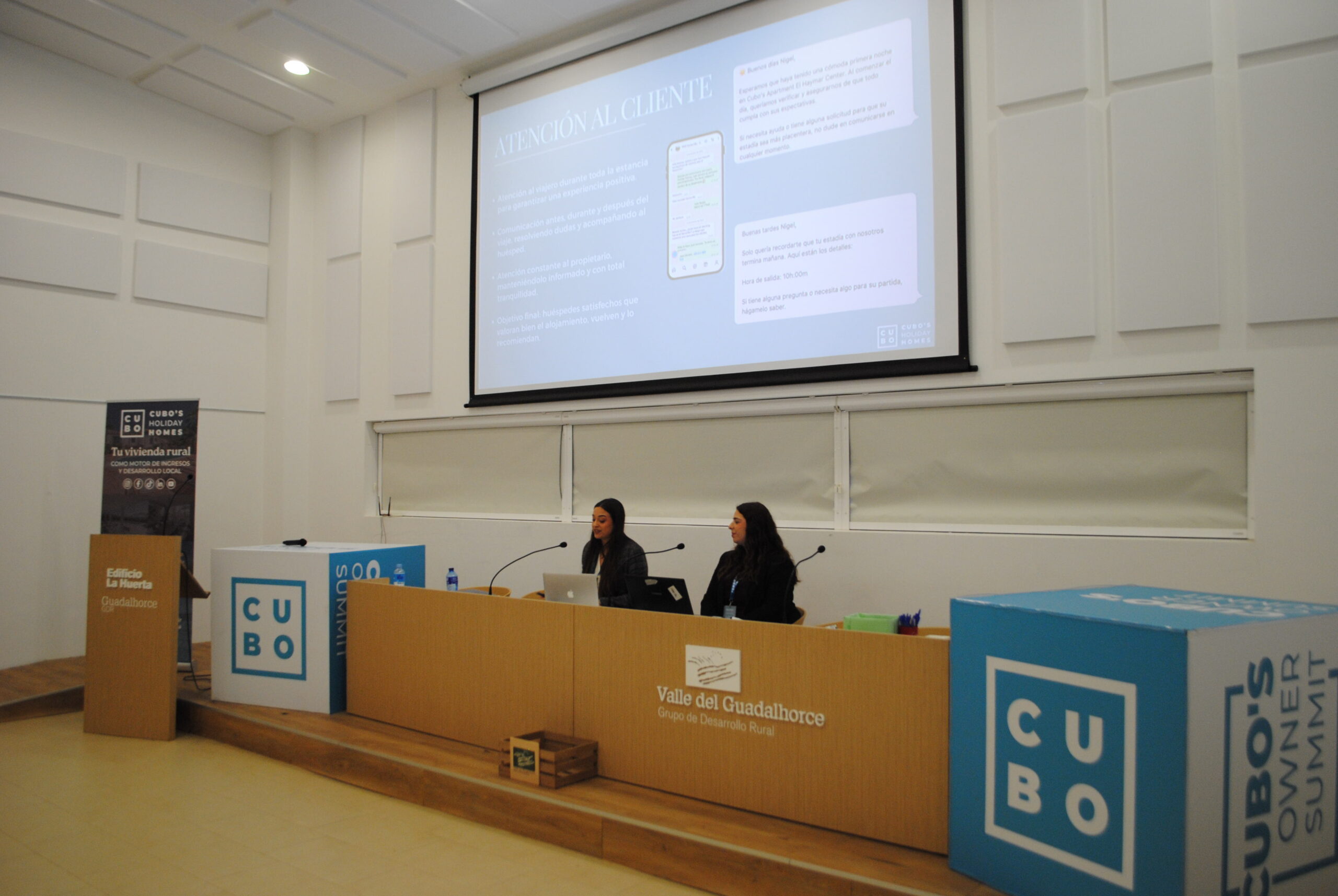
    Paula Gómez and Natalia Gómez, from the Marketing and Customer Service Department, addressed one of the key factors in increasing bookings: the online visibility of tourist accommodation. They explained how professional photographs and SEO optimisation of listings improve a property’s ranking on platforms such as Booking or Airbnb. They also emphasised that smooth communication with guests – before, during and after their stay – influences the overall experience. They provided real-life examples, demonstrating how positive reviews and customer service influence the decision to book.

    The value of the region and local produce

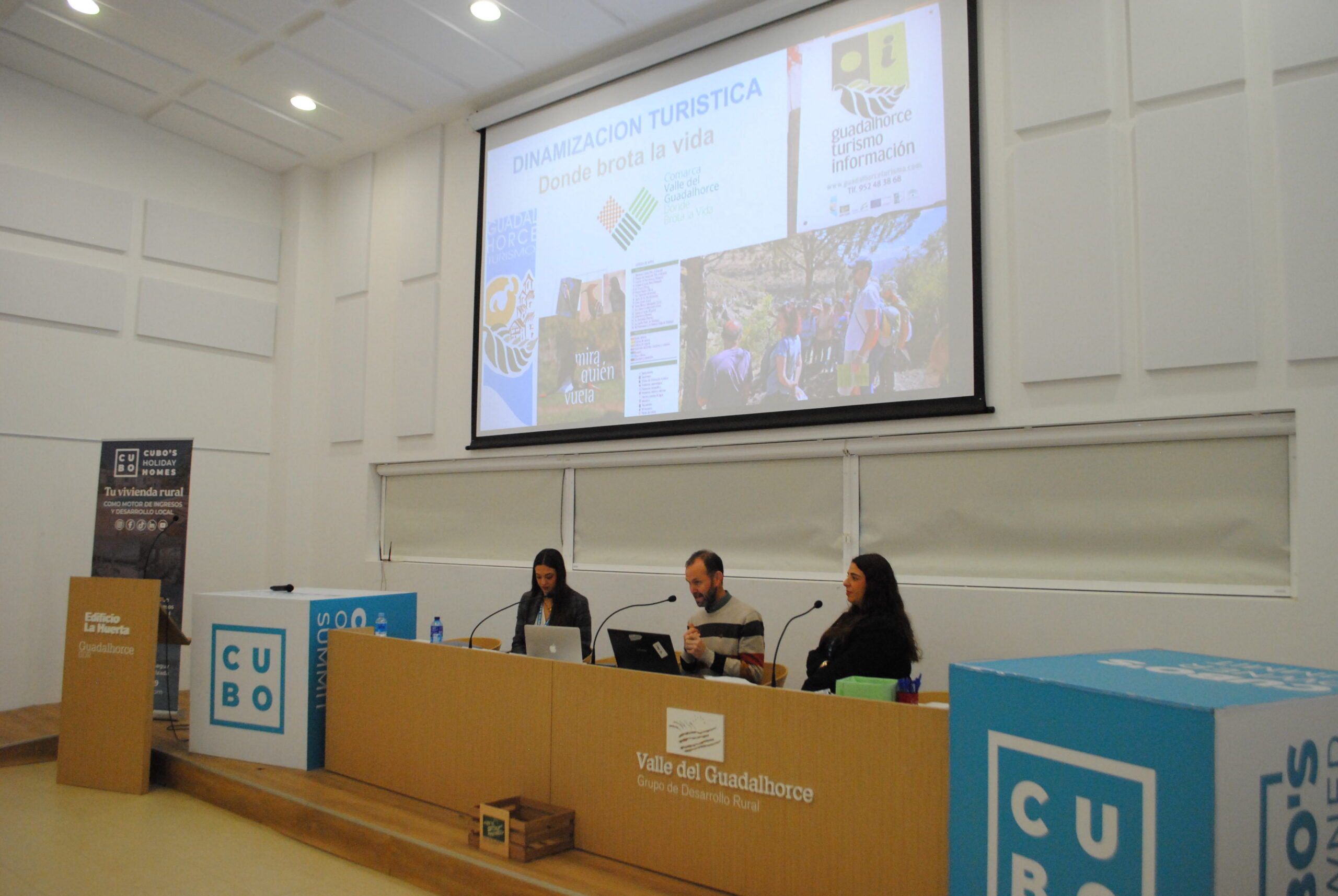
    Sebastián Hevilla Ordoñez, manager of the Valle del Guadalhorce Rural Development Group, gave a talk on regional identity and the value of local produce as a tourist attraction. During his presentation, he highlighted the region’s iconic products, such as the ‘Huevo de Toro’ tomato, the ‘Aloreña’ olive and Málaga cheeses. He also explained how the link between agriculture, gastronomy and tourism helps to create authentic experiences for visitors.

    Tourism regulations in Andalusia for rural holiday homes

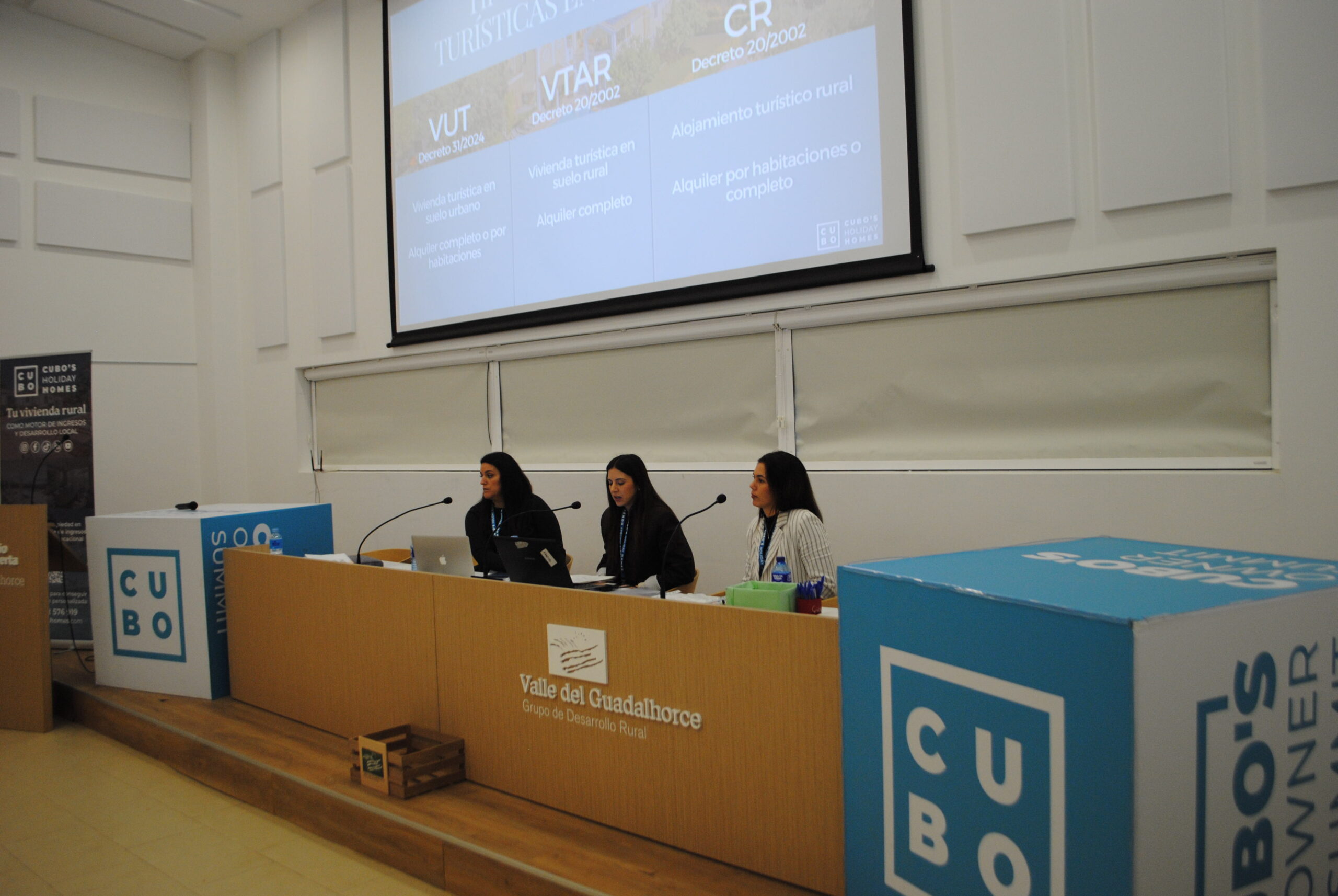
    One of the topics that generated the most interest amongst attendees was the legal framework for holiday rentals. Marina Cubo, from the Legal Department at Cubo’s Holiday Homes, clearly explained the different types of tourism licences available in Andalusia: VUT, VTAR and CR. She also detailed the requirements necessary to market a property legally. Finally, she addressed key aspects such as the NRUA register and the obligation to report travellers’ details via the SES Hospedajes system.

    Technology, distribution and strategic partnerships in holiday rentals

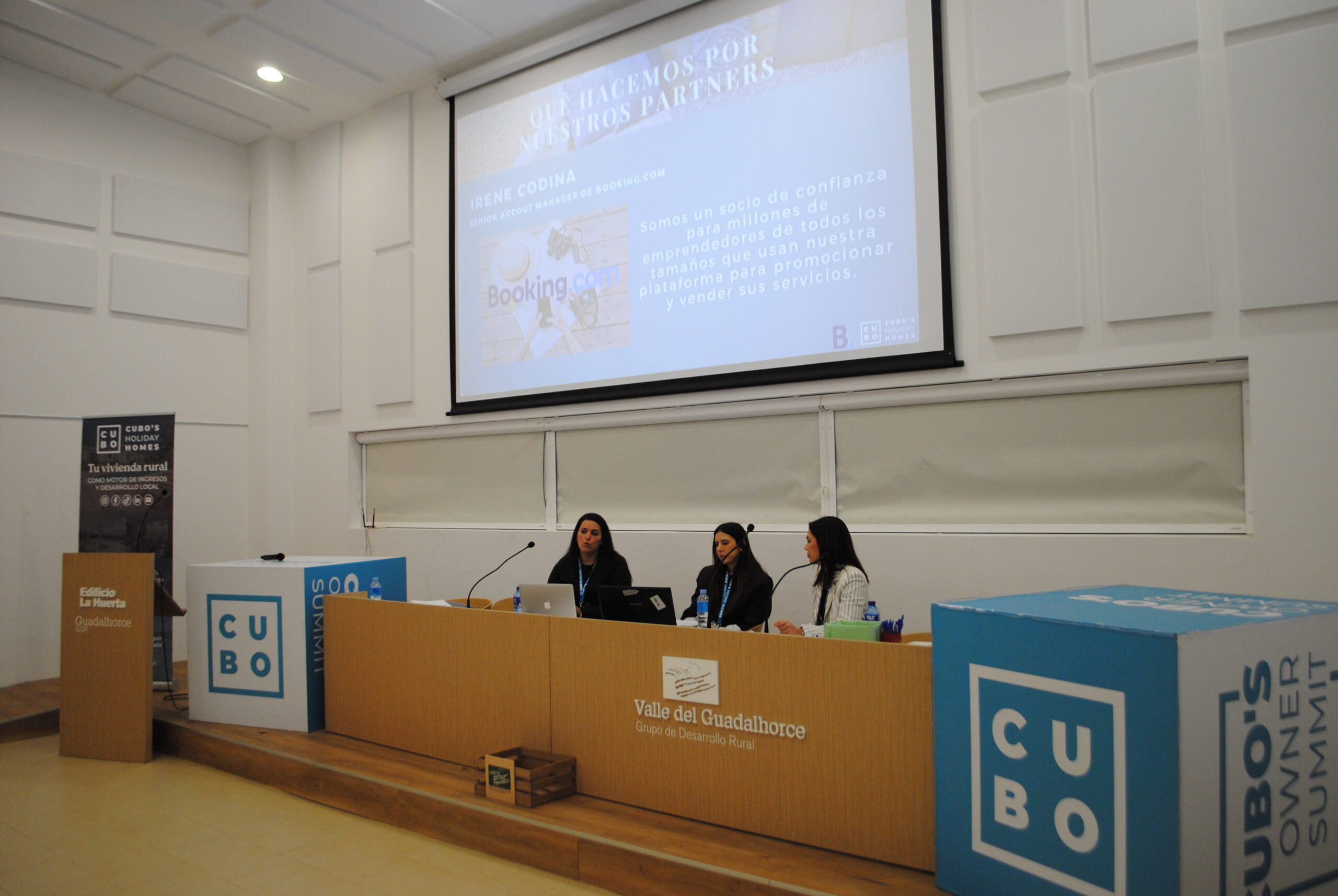
    Beatriz García, from the Product Department at Cubo’s Holiday Homes, shared the session with Irene Codina, Senior Account Manager at Booking.com. During this presentation, they explained how major booking portals act as strategic partners. On the one hand, they provide international visibility for holiday accommodation. On the other hand, they help secure bookings in line with market demand. Irene detailed how platforms such as Booking connect travellers with accommodation worldwide. She also explained that small details in the presentation of the accommodation and the services offered can make a big difference to the guest experience.

    For her part, Beatriz explored the role of the technology partners we use in the professional management of holiday homes. Among these, she highlighted Avantio for distribution and booking management, and Roomonitor for monitoring the accommodation. She also explained how the various marketing platforms support the booking strategy. She also emphasised the importance of offering complementary experiences during the stay. This improves traveller satisfaction and adds value to the accommodation.

    Dynamic pricing and analysis of the holiday rental market

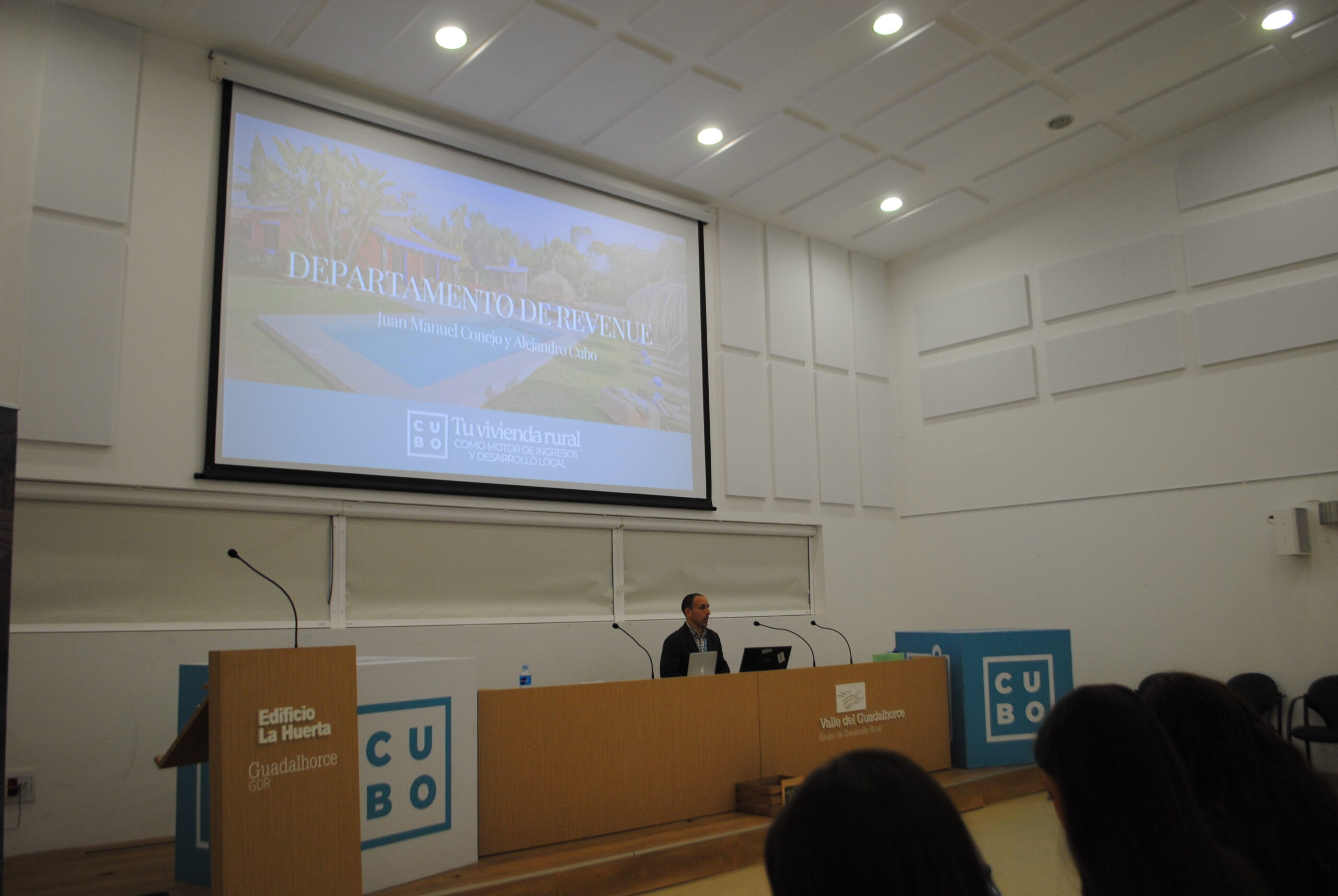
    Juan Manuel Conejo, head of the Revenue Department, explained how the holiday rental market is analysed in areas such as the Guadalhorce Valley and the Sierra de las Nieves. The aim is to establish dynamic pricing strategies. During his presentation, he demonstrated how metrics such as occupancy, average daily rate (ADR) and average length of stay enable prices to be adjusted according to demand. This makes it possible to maximise the profitability of a holiday home.

    Professional management and project growth

    To round off the day, Cristina Granados, from the Accounts Department, explained how Cubo’s Holiday Homes’ comprehensive management service works for property owners. Following a fun Kahoot! session with the attendees, she outlined the company’s growth. It currently manages over 400 properties on an exclusive basis. She also detailed the various services that enable owners to maximise the profitability of their properties whilst delegating day-to-day management to a specialist team.

    In summary, this event has taught us an important lesson: rural tourism in the Guadalhorce Valley has great potential. However, to stand out and be profitable, it is no longer enough simply to place an advert online. A clear strategy, excellent guest service, a sound pricing policy and solid legal backing are all essential.

    Do you own a rural holiday home in Málaga and want to improve its profitability?

    As we saw during the event held in Cerralba, the profitability of a holiday home does not depend solely on advertising it online. Other factors also play a part, such as visibility on booking platforms, pricing strategy, the guest experience and compliance with tourism regulations.

    At Cubo’s Holiday Homes, we have been managing holiday homes for over 9 years. We currently manage more than 400 properties on an exclusive basis in the province of Málaga. Furthermore, we help owners increase their income through professional management.

    👉 If you’d like to find out how much your property could generate, request a free profitability analysis for your accommodation.

    Thank you to everyone who joined us and made this fantastic event possible!

    See you at the next event.

    7 tips for maximising the profitability of a holiday home that we learnt at the event

    1. Get to know today’s traveller


    Understanding who visits inland Málaga (profile, nationality or type of stay) allows you to tailor your accommodation and improve your booking strategy.

    Professional photographs, good descriptions and optimised listings increase visibility and generate more bookings.

    Clear communication and good customer service before, during and after the stay have a direct impact on reviews.

    Local cuisine, regional produce and outdoor activities help your accommodation stand out.

    Having the correct licence and meeting legal requirements is essential for operating with peace of mind.

     Effective distribution across international platforms increases the accommodation’s visibility.

    Adjusting rates according to demand and market trends helps to improve annual profitability.

  • Holy Week in Málaga 2026: Complete guide, timetables and routes

    Holy Week in Málaga 2026: Complete guide, timetables and routes

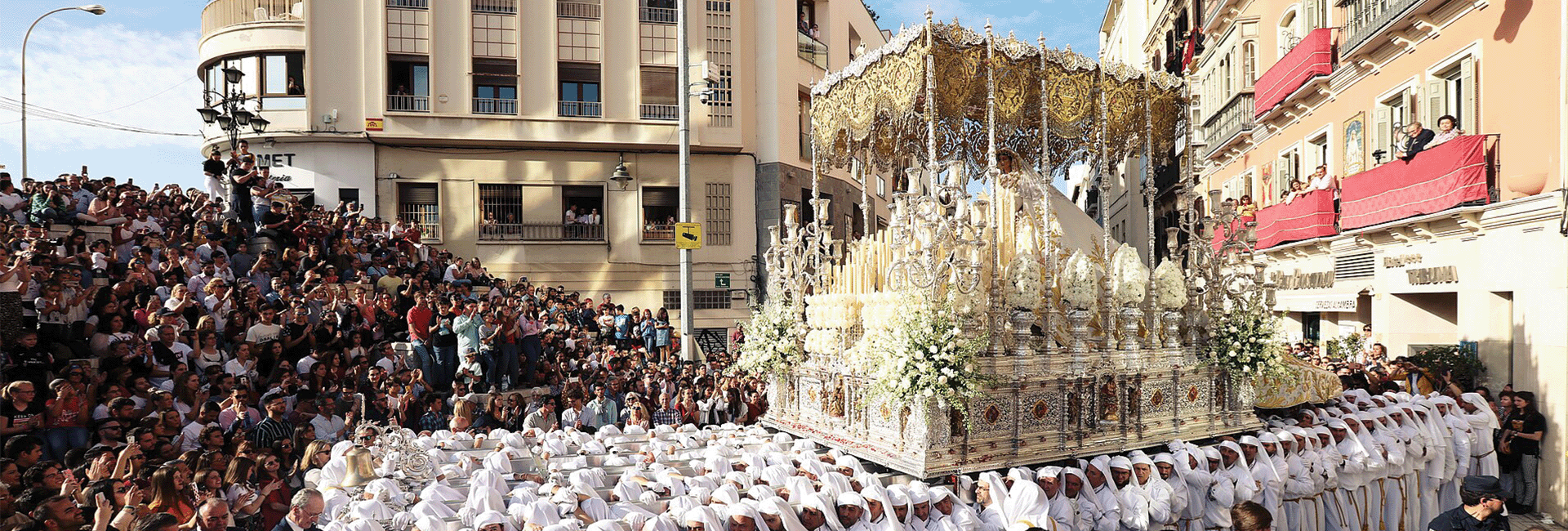
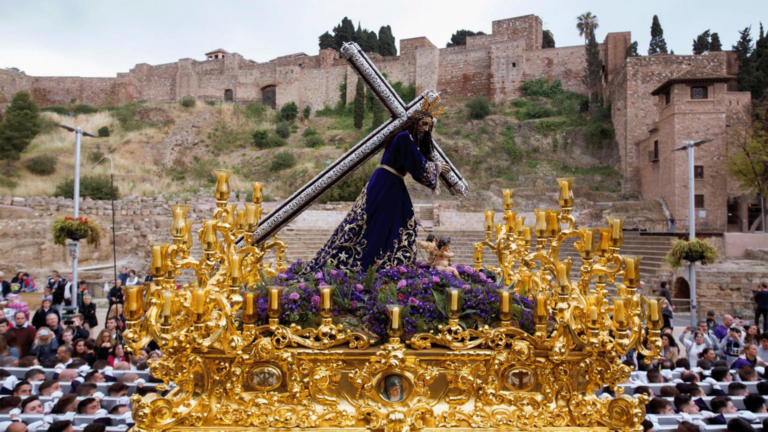
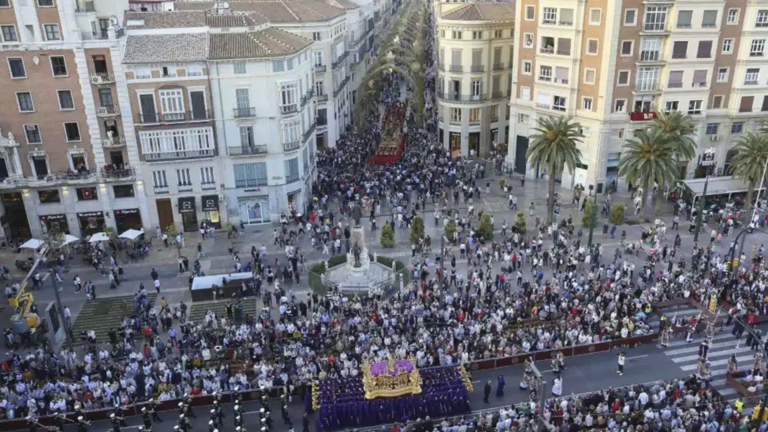
    Holy Week in Málaga in 2026 is one of the most intense religious and cultural celebrations in Spain. Consequently, this festival, which takes place during the week leading up to Easter, attracts thousands of visitors every year who come to see the Holy Week processions in Málaga, renowned for their enormous floats, their processional music and the excitement that fills every street in the historic centre. Furthermore, Holy Week in Málaga has been designated a Festival of International Tourist Interest.

    Below, we’ll tell you everything you need to know so you don’t miss a single detail on your next visit.

    📅 Dates for Holy Week in Málaga 2026

    Holy Week in Málaga 2026 will take place from Sunday 29 March (Palm Sunday) to Sunday 5 April (Easter Sunday), during which time dozens of processions organised by the city’s various brotherhoods will take to the streets.

    🎨 Official poster and new features

    The 2026 poster, created by the artist Martín España from Vélez, features a striking and innovative three-dimensional visual design with the Virgen de la Soledad de Mena as the central figure. As a result, this painting perfectly captures the devotion and aesthetic of the local brotherhoods, and has been very well received. Official Poster for Malaga Holy Week 2026

    Furthermore, among the new features of this year’s event, the enhanced organisation by the Association of Brotherhoods stands out. For example, alternative routes have been designed for some processions, with a view to improving the flow of crowds in the busiest areas. Finally, there will be a greater number of tourist information points where visitors can check itineraries and find out interesting facts in real time.

    📍 Best places to watch the Holy Week processions in Málaga

    The heart of the city is completely transformed. In fact, if you want to be sure of a good view, these are the favourite spots among the people of Málaga:

    • La Tribuna de los Pobres: Located at the end of Calle Carretería. There is also a set of freely accessible steps where the thrones are often rocked by hand.
    • The Official Route: This covers the Alameda Principal, Calle Larios and the Plaza de la Constitución. Although you’ll need a season ticket for a seat, strolling around the surrounding area allows you to admire the scale of the event.
    • The area around the Cathedral (Plaza del Obispo): Watching a throne manoeuvre to perform its ‘station of penance’ against the backdrop of the majestic façade is an unforgettable sight.
    • The processions and the ‘encierros’: Witnessing the start of the procession from a brotherhood house or the final effort of the bearers in the early hours of the morning is pure excitement.
    • Calle Carretería: One of the most traditional and photogenic streets in the old town.

    Tip: If you’re looking for a more dynamic experience, do venture off the main route to avoid the crowds. Finally, here is the itinerary from the Association of Brotherhoods.

    🕯️ Processions you can’t miss during Holy Week in Málaga

    In fact, Málaga is renowned for its immense sculptural processions, carried on the shoulders of hundreds of men and women. Here are some of the most iconic processions:

    • La Pollinica (Palm Sunday): The most joyful procession, which opens the week with Jesus’ entry into Jerusalem.
    • El Cautivo (Holy Monday): The ‘Lord of Málaga’ takes centre stage in the day’s most crowded and devout moment.
    • La Sentencia (Holy Tuesday): Renowned for the sheer scale and majesty of its procession.
    • El Rico (Holy Wednesday): Famous for the traditional release of a prisoner, a historic privilege granted by Charles III.
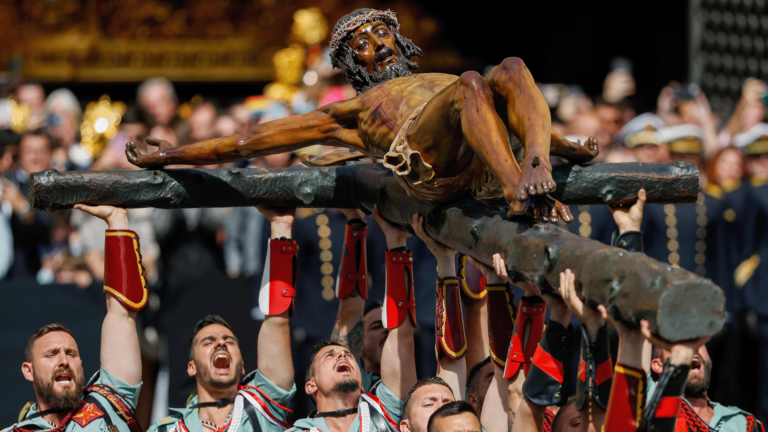
    • Cristo de la Buena Muerte (Maundy Thursday): The famous procession led by the Legion singing ‘El Novio de la Muerte’.
    • Servitas (Good Friday): A mournful procession in the early hours of the morning, during which the streetlights are switched off as the Virgen de los Dolores passes by.
    • El Resucitado (Easter Sunday): The grand finale, featuring an official representation of all the brotherhoods.

    In short, a total of 45 processions organised by Málaga’s brotherhoods take to the streets. We also recommend consulting up-to-date guides, such as La Opinión de Málaga’s Holy Week Guide 2026

    🍤 What to eat and what to do during Holy Week in Málaga

    Recharging your batteries is essential to keep up with the pace of the festivities, and the best way to do so is to try these options:

    • Traditional sweets: Torrijas, buñuelos and pestiños are the undisputed stars of Lenten baking.
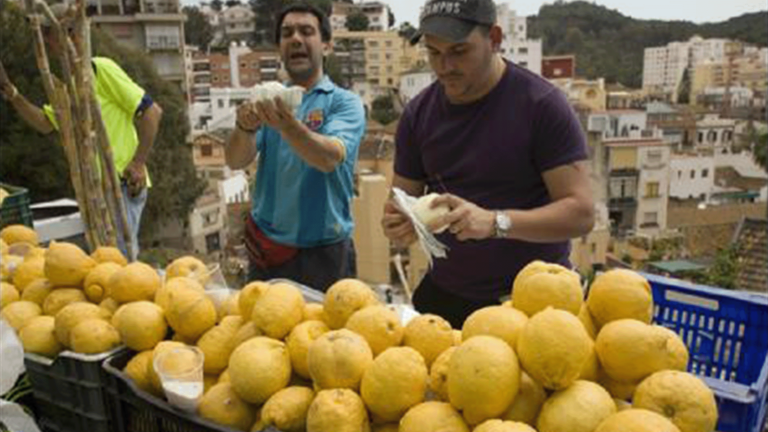
    • The “Limón Cascarudo”: The most traditional street snack. That is, slices of sweet lemon with a touch of salt to refresh the throat.
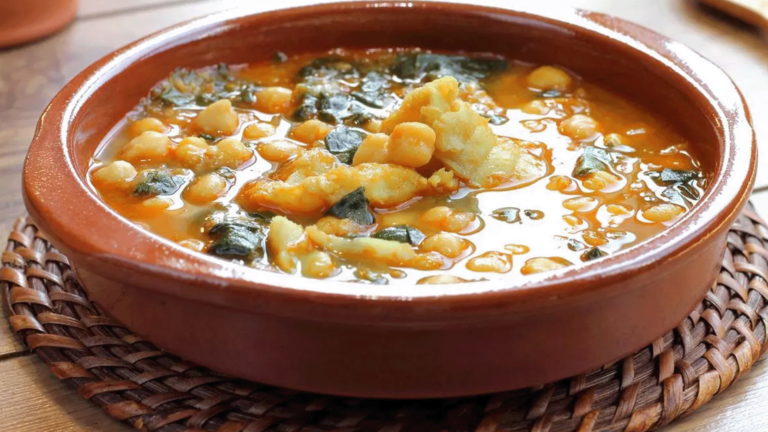
    • Vigil dishes: Traditional stews and portions of fried fish or cod are the stars of the show in the traditional taverns.
    • Morning church tour: Make the most of the mornings to visit the churches; you’ll be able to see the religious images up close and enjoy the scent of incense.
    • Panoramic terraces: Head up to the hotel rooftops for a drink and watch the sea of people from above.
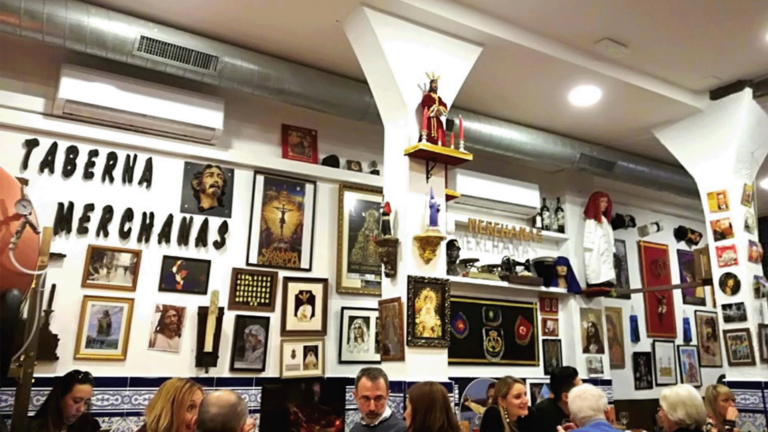
    • Brotherhood taverns: Places such as Las Merchanas, Entre Varales or Bar Nerva will immerse you in the atmosphere thanks to their carefully crafted themed décor.

    💡 Useful tips for getting around Málaga

    That said, logistics are key. Take note of these essential tips:

    • Use public transport: Trying to get there by car is a mistake. In other words, the Málaga Metro, EMT buses and the Cercanías train will be your best allies.
    • Check timetables and diversions: Services run more frequently in the early hours, but their usual stops may change. So, check the official apps before you set off.
    • Deal with the crowds: Key areas get extremely busy. For example, avoid rushing, keep an eye on your belongings and always hold children’s hands.
    • Choose comfortable footwear: You’ll be walking non-stop, and the pavement gets very slippery from the wax drippings of the candles.
    • Download ‘El Penitente’: This free app shows you where each leading cross is in real time via GPS.
    • Learn how to ‘cross the procession’: If you get stuck, look for the pedestrian crossings designated by the police and do not interrupt the lines of penitents.
    • Dress in layers: It’s warm during the day, but the sea breeze at night makes it feel much colder.

    🏡 Where to stay: Your ideal accommodation with Cubo’s Holiday Homes

    To make the most of this time of year, you need a good place to recharge your batteries. After hours on your feet, walking through crowds and admiring Málaga’s processions, there’s nothing quite like arriving at a peaceful spot with all the comforts of a real home.

    That’s why, at Cubo’s Holiday Homes, we have an exclusive selection of properties in Málaga, strategically located so you can enjoy Holy Week without compromising on comfort: your own kitchen, no strict timetables and a spacious living room to rest your feet. In fact, occupancy rates in spring are extremely high, so don’t leave it until the last minute.

    🕒 Timetable for the 2026 Holy Week processions in Málaga

    During Holy Week in Málaga 2026, the processions wind their way through the historic centre from early afternoon until the early hours of the morning. Furthermore, every day several brotherhoods set out from their respective brotherhood houses and follow the Official Route, which includes the Alameda Principal, Calle Larios and the Plaza de la Constitución.

    Timetables may vary from year to year, so it is advisable to check the up-to-date information published by the Association of Holy Week Brotherhoods of Málaga. Alternatively, the Diario Sur newspaper has published the daily itineraries, including route maps and timetables; you can view them here. 

    Conclusion

    Holy Week in Málaga is not only a religious celebration but also one of the most important cultural events in Andalusia. Spectacular processions, music, tradition and thousands of visitors transform the city into a unique setting during these days. In short, it doesn’t matter whether you’re a believer or simply passionate about culture and tradition; the allure, colour and joy of these days will completely captivate you. If you get the chance, experience it at least once in your life. You’re sure to come back!

    Frequently asked questions about Holy Week in Málaga

    When is Holy Week in Málaga in 2026?


     Holy Week in Málaga in 2026 will be held from Sunday 29 March to Sunday 5 April, beginning with Palm Sunday and ending with Easter Sunday.

     During Holy Week, 45 processions organised by the city’s brotherhoods take to the streets, winding their way through the historic centre throughout the week.

     Holy Week in Málaga draws in thousands of people. Many floats are carried by more than 200 men and women, accompanied by hundreds of penitents and marching bands who parade through the city for hours.

    Some of the most popular days are Palm Sunday, Holy Monday with the procession of El Cautivo, Maundy Thursday with the Cristo de la Buena Muerte accompanied by the Legion, and Good Friday, when the most solemn moments of the week take place.

  • Prohibition on installing CCTV cameras inside accommodation

    Prohibition on installing CCTV cameras inside accommodation

    In order to ensure compliance with current legislation on the protection of personal data and to safeguard guests’ fundamental rights, please be advised that the installation of CCTV cameras inside holiday accommodation is strictly prohibited. The ban on cameras inside holiday accommodation is a legal obligation arising from the GDPR and the LOPDGDD, which all owners must be aware of to avoid serious penalties.

    1. Legal basis for the ban

    The installation of cameras inside the property constitutes permanent and unjustified surveillance of identified or identifiable individuals, which breaches various legal provisions:

    a) Regulation (EU) 2016/679 (GDPR)

    • Article 5(1)(c) (Data minimisation): processing must be ‘adequate, relevant and limited to what is necessary’. The continuous recording of the interior of a holiday let clearly exceeds this limitation.
    • Article 6(1) (Lawfulness of processing): there is no valid legal basis to justify video surveillance in private areas where guests are enjoying their personal, private and domestic lives.
    • Article 7 (consent): guests’ consent cannot be considered freely given or valid, as it is given in a context of imbalance between the landlord and the tenant.
    • Article 9 (special categories of data): video recording could capture particularly sensitive data (health, beliefs, sexual orientation, etc.) in spaces where people have the highest expectation of privacy.

      b) Organic Law 3/2018 (LOPDGDD)

    • Article 22 (Processing for the purposes of video surveillance): this requires that video surveillance be limited to areas strictly necessary for the intended purpose. The interior of homes is not considered a legitimate area for this type of processing.
    • The AEPD has reiterated through penalty decisions (for example, PS/00477/2022 and PS/00003/2023) that it is not permissible to install cameras inside rental properties, even when they are switched off.

      c) Fundamental rights

    • Articles 18.1 and 18.4 of the Spanish Constitution: protection of personal and family privacy and data protection.
    • The expectation of privacy within a home is absolute.

    2. Scope of the prohibition

    The installation of cameras, even if they are ‘switched off’, is prohibited in:

    • Living rooms
    • Bedrooms
    • Kitchens
    • Bathrooms
    • Any other interior room in the property


    The mere physical presence of recording devices already constitutes a breach of guests’ rights, as stated by the Spanish Data Protection Agency.

    3. Consequences of non-compliance

    Failure to comply with these regulations may result in:

    • Administrative fines of up to 20 million euros or 4 per cent of annual turnover (Article 83 of the GDPR).
    • Specific penalties under the LOPDGDD of up to €300,000 for serious infringements.
    • Reputational damage, civil claims and the withdrawal of tourism licences.

    4. Information and enquiries

    If you have any doubts regarding the application of these regulations or the installation of any security system in your holiday accommodation, we recommend that you consult a professional specialising in data protection or the Spanish Data Protection Agency (AEPD) beforehand. It is essential to ensure that any measures taken fully comply with current legislation and respect the fundamental rights of guests. 

    For any further clarification, please contact our team, who will advise you on the legal options available regarding security and regulatory compliance.

  • How to prepare your accommodation for the peak season: a free checklist for property owners.

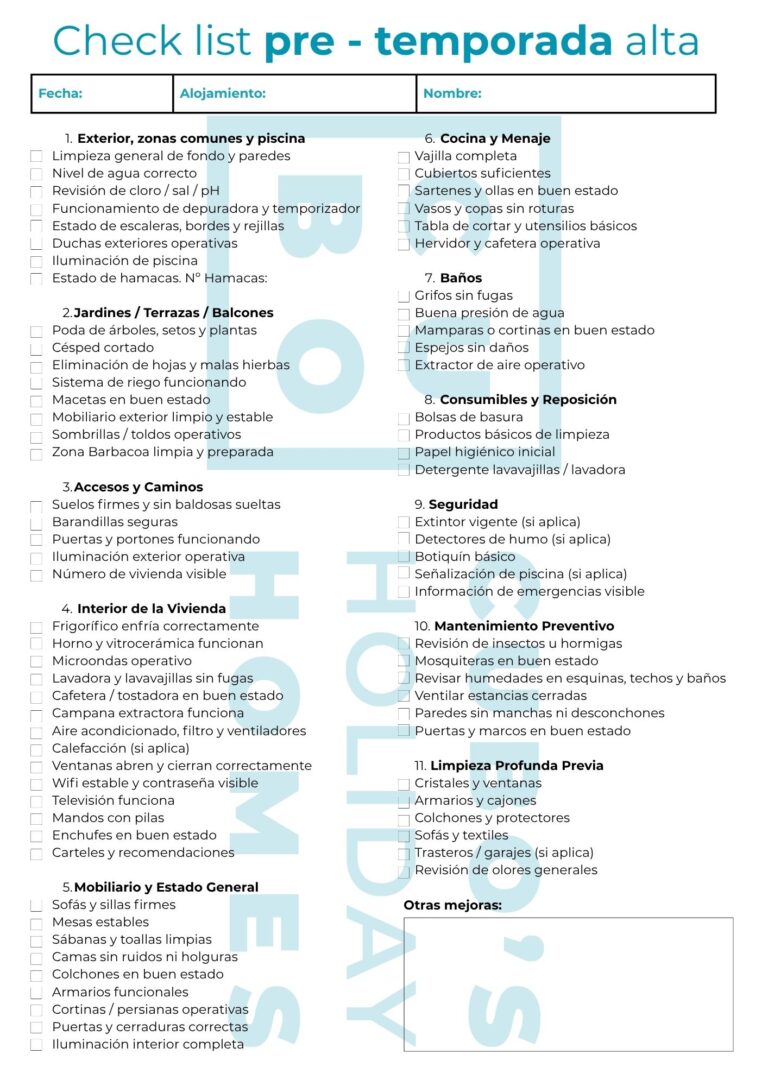
    How to prepare your accommodation for the peak season: a free checklist for property owners.

    There’s one crucial moment every year: that’s when everything is decided. It happens earlier, in the weeks leading up to the start of the peak season. How you prepare your accommodation is key. That’s why having a checklist for your holiday accommodation can make the difference between a fully booked calendar and one that’s only half full. 

    Details that turn into reviews (and affect your bookings)

    It’s not the photos, it’s not the price, nor is it the location. The mistake that costs you the most money is failing to give your accommodation a critical once-over before the peak season.   

    A guest might overlook simple décor, but they won’t forgive a poor night’s sleep, an air conditioning unit that takes ages to cool down, or a bathroom that smells of damp. Put simply, they won’t forgive a bad first impression.

    What travellers really value – and this doesn’t always match what the owner thinks.

    After many years of collecting reviews and analysing guest behaviour, certain patterns emerge time and time again:

    • 🛏 Sleep: it’s not enough just to have a bed; guests need to sleep well. You must avoid sagging mattresses, uncomfortable pillows, outside noise and curtains that don’t block out the light. A poor night’s sleep very often leads to negative reviews.
    • ❄ Heating and cooling: nobody wants to wait half an hour in summer for the room to cool down, nor to be shivering in winter until they figure out how the heating or the fireplace works. Thermal comfort is crucial and tends to be neglected more often than is admitted.
    • 🧼 Cleanliness: it’s not just about how it looks, it must feel clean; a fresh smell, spotless windows or well-maintained crockery can improve the overall impression.
    • 📶 Stable connectivity: Wi-Fi is essential; these days, many travellers book their stays and work remotely, and weak or unstable Wi-Fi can cause a great deal of frustration.
    • 🚿 Bathrooms: it’s not enough for them to be clean and have toilet paper; the water must have good pressure, the shower screens must close properly, and there must be good ventilation.
    • 🔑 First impressions: Squeaky doors, burnt-out light bulbs, confusing signage or neglected entrances create a sense of mistrust even before guests step inside.

    Peak season for holiday accommodation: more bookings and higher expectations

    When demand for holiday rentals rises, so does the level of comparison. Guests look at more options, read more reviews and take longer to make a decision. In peak season, there is greater price competition and flaws are spotted sooner. In short, a minor issue in the off-season may go unnoticed, but in peak season it can lead to a public review.

    Having a well-prepared property can make all the difference and perform better than a more luxurious one. This means anticipating faults before the guest spots them, checking the facilities even if they seem fine, thinking like a traveller rather than an owner, and taking care of the whole experience, not just the aesthetics.

    Accommodation that is thoroughly checked before the peak months receives better reviews, has fewer issues, commands higher prices and encourages repeat bookings.

    To help you with this process, we’ve put together a free holiday accommodation checklist, designed to help you go through your property step by step and leave nothing to chance.

    Download the free holiday accommodation checklist:

    We know that many owners, even when they have the tools, don’t have the time needed to coordinate cleaning, laundry, guest check-ins or booking management. And that’s where good organisation makes all the difference in running a profitable holiday let.

    If you’d rather focus on your property without worrying about day-to-day operations, we can help you with:

    • Booking and calendar management
    • Co-ordinating professional cleaning services
    • Laundry service
    • Guest services
    • Continuous optimisation of the guest experience

    A well-prepared property is important. A well-managed property is what truly delivers long-term stability and profitability.

    If you’d like to explore your options with no obligation, we at Cubo’s Holiday Homes would be delighted to speak to you and see how your property fits within a professional management service.

  • NRUA 2026 Information Sheet: everything you need to know🏡

    NRUA 2026 Information Sheet: everything you need to know🏡

    NRUA 2026 Information Form: everything you need to know

    The entry into force of Order VAU/1560/2025 has raised many questions amongst holiday let owners. This is a new reporting obligation; it does not involve a new registration or a new licence.

    It stipulates that holders of an NRUA must submit a form once a year detailing the stays that have taken place at their property during the previous year. It is a registration mechanism to monitor the use of the property as a short-term let; it serves no tax purpose and does not replace the guest register.

    Who is affected by this obligation

    Only those owners who obtained their Unique Rental Registration Number (NRUA) in 2025 are required to submit this form, as those who obtained it in 2026 will not need to complete this procedure until next year, and in 2024 the NRUA did not exist.

    This includes all owners or operators who hold an active NRUA, whether for holiday or tourist lets, lets for work or study purposes, medical treatment or other temporary, non-permanent uses. Each property with an NRUA must be declared separately.

    Deadline for submitting the NRUA Annual Information Return

    It must be submitted between 1 February and 2 March 2026, recording the data for the 2025 financial year. Stays taking place throughout the whole of 2025 must therefore be declared. From then on, this will become an annual obligation. Each February, the details for the previous year must be declared.

    Even if the property has not had any bookings, the form must still be submitted, ticking the ‘no activity’ option. Here is the link to the Official State Gazette (BOE) containing the official documentation to be submitted.

    What information is required in this document

    This is an informative document; it does not include guests’ personal details or financial information. The details required are:

    • Details of the owner or person submitting the return
    • Unique Property Registration Code (CRU)
    • NRUA number
    • Purpose of the tenancy (holiday, work, study, etc.)
    • Number of guests per stay
    • Check-in date
    • Check-out date (always fill in to avoid any issues)

    Why it is important to submit this document

    It is very important to submit this document because failure to do so may result in the Ministry of Housing initiating proceedings to revoke the NRUA, which would prevent the property from continuing to be advertised on online platforms.

    The order does not impose direct financial penalties, but it does provide for significant consequences, such as issues with the property register, requests to rectify the situation, withdrawal of the NRUA, and the inability to legally operate the property as a short-term let.

    Where to submit the NRUA Annual Information Form

    The form is submitted to the relevant Land Registry, with two options available: in-person submission on paper or online submission via the Association of Registrars. It is recommended to submit it in XBRL format to speed up automatic validation, as this is the electronic format used in the official taxonomy for this form.


    How we at Cubo’s Holiday Homes can help you

    At Cubo’s Holiday Homes, we offer you two options to help you comply with this obligation.

    Option 1: Full management by Cubo’s Holiday Homes

    We take care of the process: we prepare the NRUA Information Return, submit it to the Land Registry and confirm when the process is complete. If any information or documentation is missing, we will contact the owner to complete the process within the statutory deadline. Please contact us to find out the cost of this service.

    Option 2. Submission by the owner

    Cubo’s Holiday Homes will send you the NRUA Informative Declaration, already completed, and the property owner must submit it to the Land Registry where the property is registered. The owner must pay the corresponding fee directly to the Land Registry. The cost of the procedure corresponds to the Land Registry’s fee, currently €32.


    1. Is this a new licence or registration?


    No. The NRUA Informative Declaration is not a new licence nor does it replace any existing one. It is simply an annual informative declaration regarding the use of the property.

    Yes. Even if you have not had any guests staying during the year, you must still submit it, ticking the ‘no activity’ option.

    No. The form does not ask for names, national identity numbers, passport details or financial information. Only the arrival and departure dates and the number of guests per stay are declared.

    The regulations do not specify a direct fine, but failure to submit the form may lead to registration issues, requests for rectification or even the revocation of the NRUA, which would prevent you from advertising the property on platforms.

    Yes. Each property with an active NRUA must be declared separately, even if they belong to the same owner.

    You can do this in person at the Land Registry or online. It is not compulsory to hire anyone, but getting help can prevent formal errors that might lead to subsequent requests for rectification.

    No. These are different procedures. The NRUA form is for registration purposes, not tax purposes; it does not replace either the guest register or tax obligations.


    The NRUA Information Form is a simple but important procedure for keeping your property up to date and avoiding future issues. If you’d prefer some support or simply want to ensure everything is correct before submitting it, our team can advise you with no obligation. Sometimes, a quick check now can save you a lot of hassle later on.

  • Málaga Carnival 2026: a comprehensive guide for the whole province 🎭

    Málaga Carnival 2026: a comprehensive guide for the whole province 🎭

    Málaga Carnival 2026: a comprehensive guide for the whole province

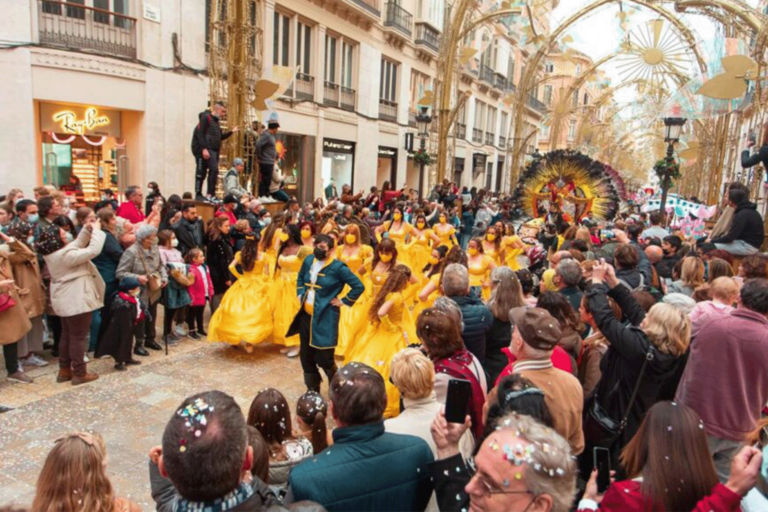
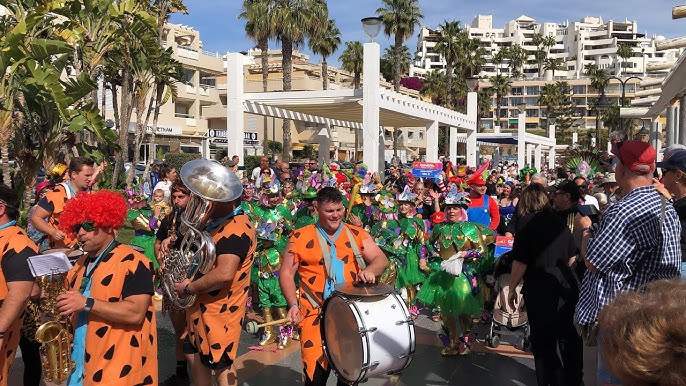
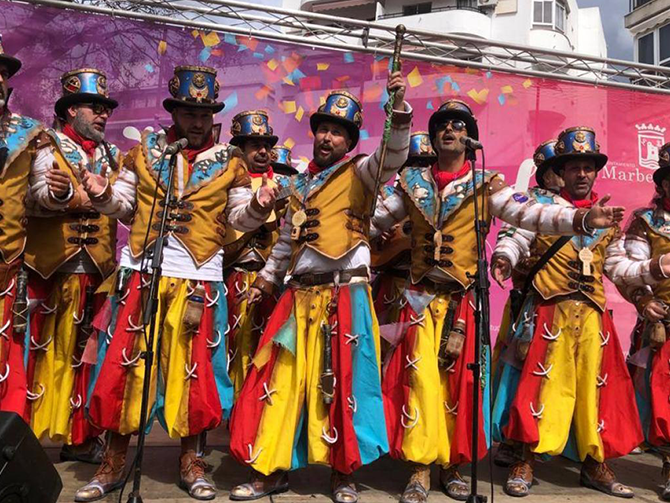
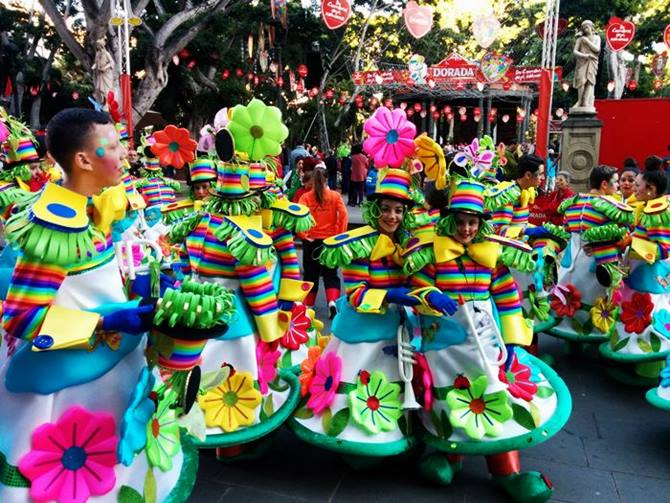
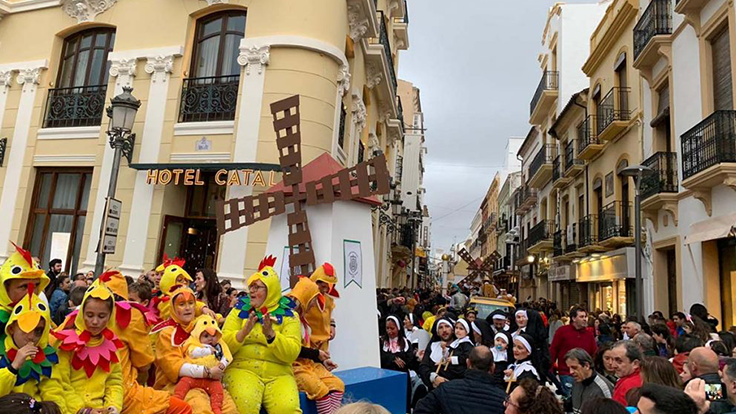
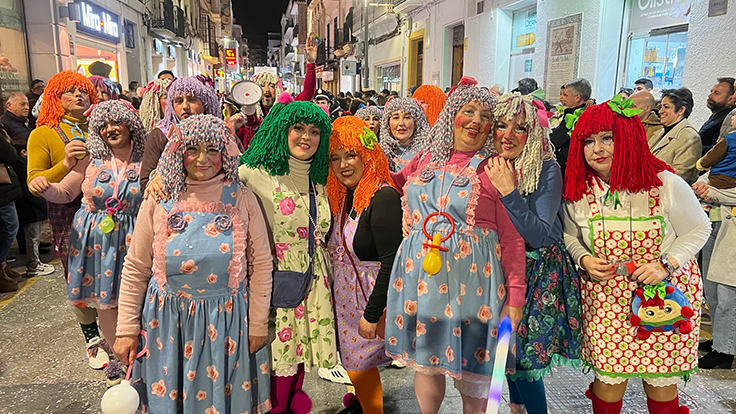
    Málaga Carnival 2026 will take place from 7 to 15 February and will fill the capital and numerous towns across the province with parades, competitions, fancy dress, music and traditional cuisine. This guide brings together the key dates, confirmed activities and the top spots for enjoying the carnival in Málaga in 2026.

    As well as the capital, towns such as Torremolinos, Benalmádena, Fuengirola, Vélez-Málaga and Marbella also hold their own carnival celebrations, allowing you to plan themed getaways across the province and visit less crowded spots in February.

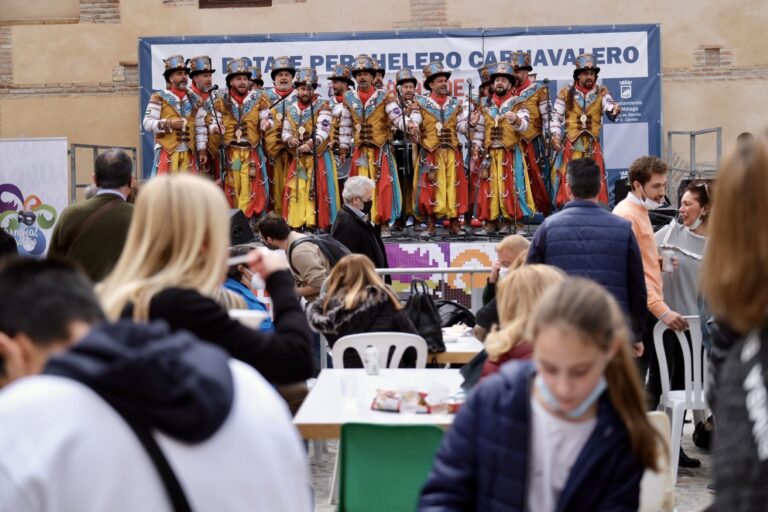
    The preliminary round of the COAC (Official Singing Groups Competition) will take place between 23 and 30 January at the Higher School of Dramatic Art (ESAD). The semi-finals will be held from 1 to 4 February at the Cervantes Theatre. Finally, the grand final is scheduled for Friday 6 February. Once the competition has finished, the following day the celebrations will begin in the streets of the city centre and in some of the city’s neighbourhoods. Below are the most important dates and events.

    📅 Key dates for the 2026 Málaga Carnival

    📍 1–4 February → COAC semi-finals at the Cervantes Theatre.

     📍 6 February → COAC final at the Cervantes Theatre.

     📍 7 February → Opening address, election of the Carnival God and Goddess, and street carnival. 

     📍 8 February → Parade and children’s competition.

     📍 12 February → Grand Final in the Plaza de la Constitución.

    📍 13–14 February → Drag Gala and Battle of the Flowers.

    📍 15 February → Grand Boqueroná and Burial of the Boquerón.

    🎭 Málaga Carnival: programme and highlights

    Málaga city centre hosts the most extensive programme of events. Most of the activities are free and take place in the Plaza de la Constitución, Calle Larios, the Cervantes Theatre and neighbourhoods such as El Palo, El Perchel and Palma-Palmilla.

    Here are the best-known events of the Málaga Carnival:

    🎤 Official opening speech: marks the start of the carnival in the Plaza de la Constitución.

    👑 Election of the God and Goddess of Carnival: a symbolic event that is very popular with the people of Málaga.

    🎺 Parade and fancy dress competitions: parades that fill the historic centre with colour and live performances.

    🌈 Drag Gala: one of the most eye-catching and well-attended shows of the carnival.

    🌸 Battle of the Flowers: a battle of confetti and flowers held mainly on Calle Larios.

    🐟 Gran Boqueroná and Burial of the Anchovy: anchovy snacks for everyone and the traditional closing ceremony on La Malagueta Beach with the parade and the burial of the anchovy.

    Finally, the combination of daytime and evening events means that everyone can enjoy the 2026 Málaga Carnival, whatever their travel style: families, couples or groups of friends.

    🌍 Carnival in towns across the province

    As well as the capital, other towns also celebrate their own carnivals with parades, competitions and family-friendly activities.

    🥁 Torremolinos

    In Torremolinos, Carnival is celebrated with great enthusiasm, a lively atmosphere and massive participation from the town’s residents. There are numerous activities, such as the ‘Chirigotas’ competition, the Carnival parade in La Carihuela, the children’s fancy dress competition and the Grand Carnival Ball at the Conference and Exhibition Centre. Furthermore, the Drag Queen Gala, a key event in the LGBTIQ+ community, will take place on 21 February. Finally, the traditional Burial of the Sardine is held near the San Miguel neighbourhood. 

    🎷 Benalmádena

    The Benalmádena Carnival takes place across Arroyo de la Miel, Benalmádena Pueblo and the Marina. The highlights include the batucada performances, the parades with floats, the group competition and the children’s parties in squares and parks. In addition, daytime events are held at the Marina, accompanied by dancing and carnival troupes. It is therefore an ideal destination for those looking for a Carnival by the sea. Finally, whilst there are no official dates yet for the Benalmádena Carnival, it is set to take place in mid- to late February. 

    👨‍👩‍👧 Fuengirola

    Fuengirola offers a very family-friendly Carnival, with neighbourhood parades, children’s workshops, entertainment and fancy dress competitions in central squares. In addition, events are usually organised in the Plaza de España, featuring local performances and music. In this case, the programme is accessible, convenient and highly rated by those travelling with children. Finally, it will take place during the first fortnight of February, although no official dates have been announced yet.

    🌆 Marbella and San Pedro de Alcántara

    Marbella celebrates its Carnival with parades through the town centre, fancy dress competitions, dances in the squares and activities for children. The Carnival begins with the Carnival Poster Competition in mid-January and ends in mid-February. Meanwhile, in San Pedro Alcántara, a separate programme is organised featuring street parades, school performances, bouncy castles, entertainment and music. In short, the combination of an urban setting and family-friendly activities ensures it is well received by locals and visitors alike.

    🌊 Estepona

    Now let’s talk about the Estepona Carnival, which takes place on 7 and 8 February. Here, the festivities are centred around squares and open spaces, where children’s and adults’ competitions, performances by local groups, parades and daytime carnival events featuring food and music take place. In the evening, there are usually live performances and dancing. In short, the programme allows you to enjoy both family-friendly activities and nightlife.

     🌄 Vélez-Málaga and Torre del Mar

    In Vélez-Málaga, the Carnival is held from 21 to 24 February (although the date has not yet been confirmed). It includes a grand parade along the main avenues, featuring groups, costumes and floats. In addition, children’s competitions, shows and music are organised in the town centre’s squares. In short, the town turns out in force onto the streets, creating a festive and friendly atmosphere.

    Torre del Mar celebrates its own Carnival from 11 to 14 February with parades, children’s entertainment and events along the seafront promenade, giving it a distinctly Mediterranean feel. There are also fancy dress competitions, performances and prize-giving ceremonies. In short, it’s a great option for anyone wanting to enjoy Carnival by the sea.

    🎺 Coín, Alhaurín el Grande, Alhaurín de la Torre, Cártama and Álora

    The towns in the Guadalhorce Valley celebrate Carnival with parades, competitions, children’s entertainment, local groups and festivities in the town squares. What’s more, each town tailors the programme to its own style, offering intimate experiences that are ideal for those seeking a Carnival away from the crowds. In this case, the festivities take place throughout February and into early March. 

    🏘 Mijas Pueblo, Las Lagunas and La Cala

    Mijas has three towns, each celebrating Carnival in its own way: Mijas Pueblo with events in squares and charming narrow streets; Las Lagunas with parades, competitions and open-air stages; and La Cala with daytime Carnival, children’s performances and parades by the sea. Here, the variety on offer means you can choose according to your preferred style of celebration. Finally, it takes place in late February and early March. 

    🐟 Nerja

    Nerja offers a lively Carnival that usually includes parades, parties in the Plaza de España, children’s competitions, music and the ‘Entierro del Chanquete’ – a highly symbolic and entertaining event that brings the festivities to a humorous close. It takes place from 12 to 15 February. In short, it is one of the most picturesque carnivals on the eastern coast.

    🏞 Ronda

    Ronda comes alive with Carnival in its main streets, featuring parades along Carrera Espinel and events in the squares of the historic centre. It takes place from 14 to 22 February. There are also fancy dress competitions, children’s activities and performances by local groups. Against the backdrop of the impressive cityscape, the Carnival takes on a very special atmosphere.

    💡 Tips for enjoying the 2026 Málaga Carnival

    ✔ Book in advance if you’re travelling in February.
    ✔ Check timetables on each local council’s official website in the days leading up to the event.
    ✔ Arrive at the parades in good time to avoid the crowds.
    ✔ Use public transport to get around Málaga city centre more easily.
    ✔ Try the local cuisine (boquerones, pescaíto, tapas)

    🏨 Where to stay during Carnival

    Depending on your travel plans, you can choose:
    Málaga city centre: perfect for getting around on foot, experiencing the carnival and avoiding the need for a car. Here are the best places to stay.
    Costa del Sol: combine the beach with the carnival (Torremolinos, Benalmádena, Fuengirola).
    Inland towns: quieter family getaways where Carnival is also celebrated (Alhaurín el Grande, Coín, Cártama).
    In short, if you need accommodation, at Cubo’s Holidays Homes we’ll help you find the right option based on the number of people, location and type of trip.

    🔗 Useful links

    🎉 The province of Málaga awaits you in February

    The 2026 Málaga Carnival is one of the most colourful winter events in Andalusia. With confirmed dates, street events, competitions, music and local cuisine, it’s a unique opportunity to discover the province from a different perspective. Whether in the capital or in the coastal and inland towns, the carnival offers something for every type of traveller. Come and experience unforgettable moments.

  • Discover the best walking routes in the province of Málaga

    Discover the best walking routes in the province of Málaga

    If you’re not sure what to get up to in Málaga, these are the most popular walking routes in the province. What’s more, the mild climate, mountains and gorges offer a wide variety of routes to suit all levels of difficulty. Before you set off, remember to wear suitable clothing and footwear, take water and sun cream with you, and check the weather forecast to avoid extreme heat.

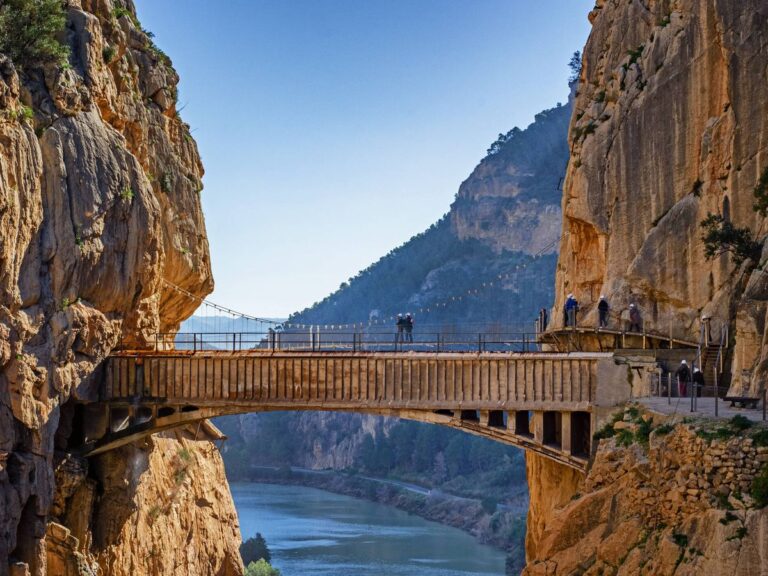
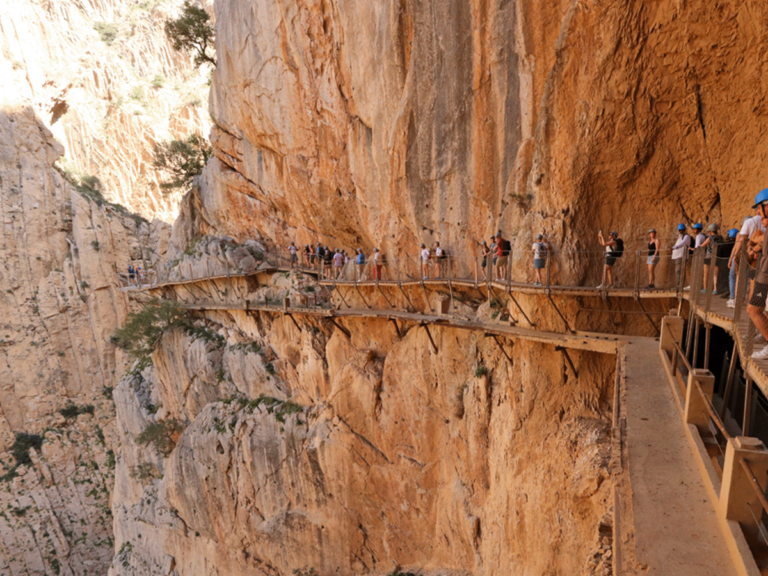
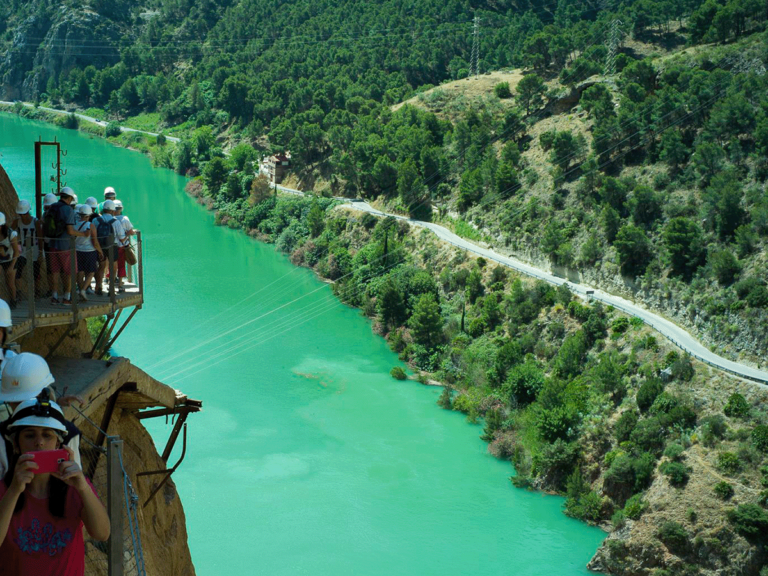
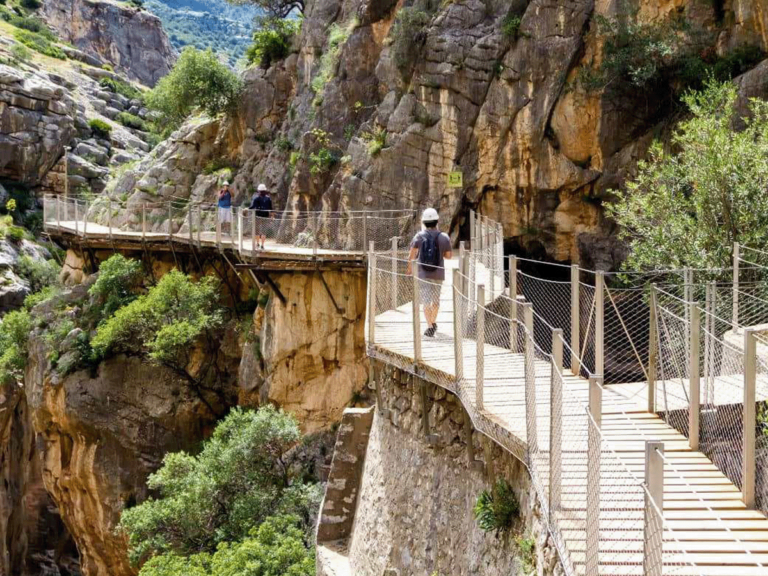
    1. The Caminito del Rey trail (Ardales and Álora)

    A well-known route that runs along footbridges suspended above the Desfiladero de los Gaitanes gorge. Its name comes from a visit by King Alfonso XIII in 1921; it also offers stunning views along a well-maintained path set in a unique natural environment. It’s also advisable to book your tickets for the Caminito del Rey well in advance, and if you want to take photos with fewer people in the frame, you should go early, as there are fewer hikers at that time. Here are some places to stay in Ardales and Álora where you can rest after visiting the Caminito del Rey. 

     ✅Route details: 7.7 km, medium difficulty, and takes between 3–4 hours.

    2. Visit El Torcal and the Peñón de los Enamorados (Antequera)

    Designated a UNESCO World Heritage Site, El Torcal de Antequera is famous for its karst landscape, renowned for its natural limestone sculptures, formed millions of years ago by the erosion of water and wind on marine sediments. There are also several signposted trails starting from the visitor centre, from where you can climb up to the Peñón de los Enamorados to enjoy a breathtaking panoramic view. For all these reasons, El Torcal de Antequera is a very popular route thanks to its peaceful surroundings, fresh air and the panoramic view from the summit. You can explore the area at your own pace, although it is advisable to join a guided tour to gain a better understanding of the surroundings. Here are the best places to stay near El Torcal. 

    ✅ Route information: easy green route, longer yellow route, distance 3–4 km, difficulty: easy to moderate, duration: 1–2 hours. 

    TORCAL

    3. Discover the River Chíllar (Nerja)

    A hike upstream where you’ll find natural pools, narrow gorges, cool water and plenty of shade. For this reason, it’s best to do this route in summer as the setting is ideal for escaping the heat. There are several jumps into pools for the more adventurous, and it’s essential to wear water shoes or other footwear that can get wet on the River Chíllar. It’s also advisable to avoid peak periods. Here are some nearby places to stay. 

    ✅ Route details: 8–12 km depending on the section chosen, medium difficulty and duration of 3 to 5 hours. 

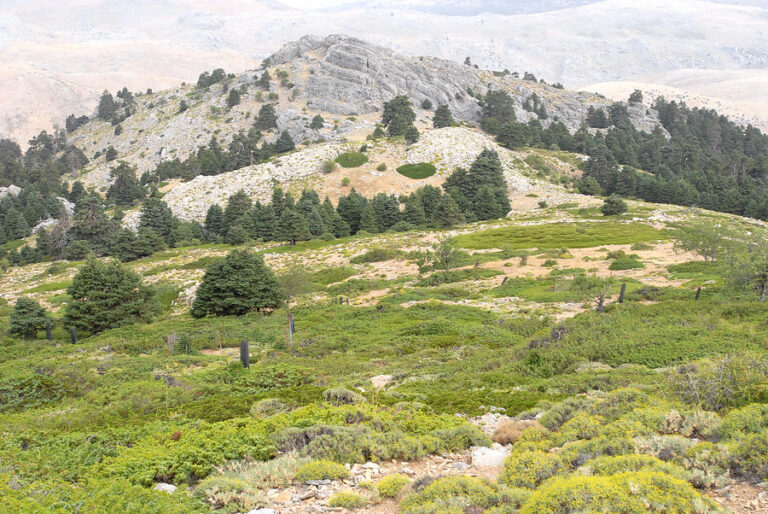
    4. Route through the Sierra de las Nieves (Marbella)

    An iconic climb from Marbella. It isn’t technically demanding, but it does require a good level of fitness. What’s more, the Pico de la Concha is an exceptional viewpoint from which, on clear days, you can even see Africa on the horizon. For this reason, it’s recommended that you have some experience and set off early when hiking in the Sierra de las Nieves to avoid the hottest part of the day and to ensure you’re back before nightfall. Complete the route in the Sierra de las Nieves and stay at one of these places to stay in Marbella. 

    ✅ Route information: distance 14 km, medium-high difficulty and duration between 5 and 7 hours. 
    5. El Fuerte (Frigiliana)
    This trail starts in one of the prettiest ‘white villages’ of the Axarquía; it lies on the eastern coast of the province and is close to the River Chillar. The El Fuerte trail in Frigiliana combines nature, sea views and a picturesque town centre where you can enjoy some tapas and a stroll after your hike. Furthermore, very close to Frigiliana is Nerja, a charming town, and Maro with its beaches, which are ideal for diving in the Mediterranean. In short, if you’re looking for walking routes in Málaga, this is a great area to explore the Axarquía region and stay close to several trails.

    ✅ Route details: 7 km long, moderate difficulty, and takes between 3 and 4 hours.

    arc_17118_g

    6. Hiking along the Cañada del Lobo (Torremolinos)

    A route of moderate difficulty, accessible and close to the city of Málaga. It’s also a very pleasant route near the Costa del Sol, featuring a striking viewpoint: the Mirador del Lobo. It combines Mediterranean woodland and shaded sections on a peaceful walk, ending with an impressive sculpture of a wolf and views of Torremolinos and the coastline. For this reason, it’s advisable to set off for the Cañada del Lobo early to avoid the heat and take your time on the walk, enjoying the route. In short, if you’re looking to enjoy the Costa del Sol, these are the places to stay in Torremolinos. 

    ✅ Route details: 8 km in length depending on the section chosen, easy to moderate difficulty, and takes between 2 and 3 hours. 

    Powered by Wikiloc

    7. Montes de Málaga

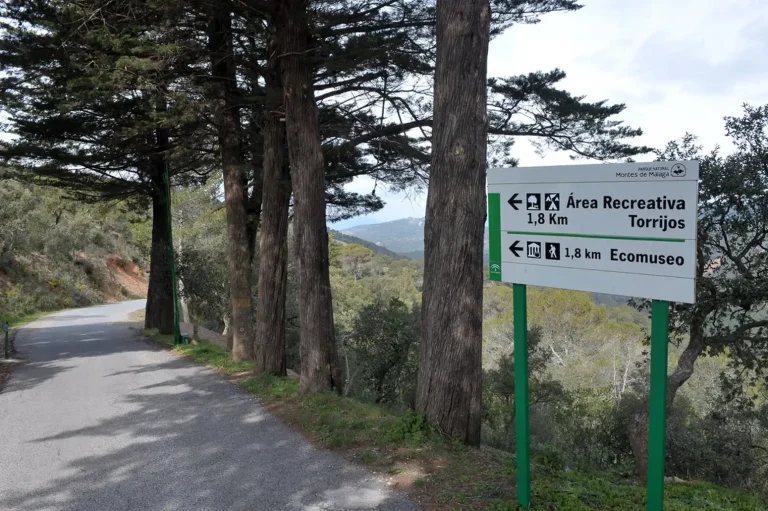
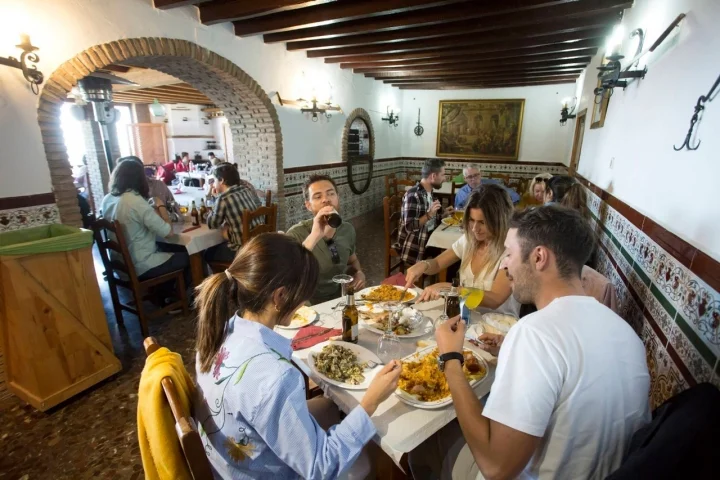
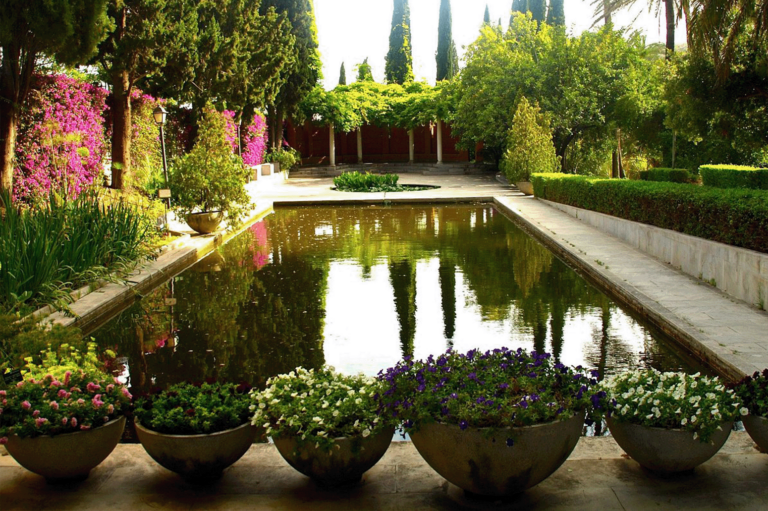
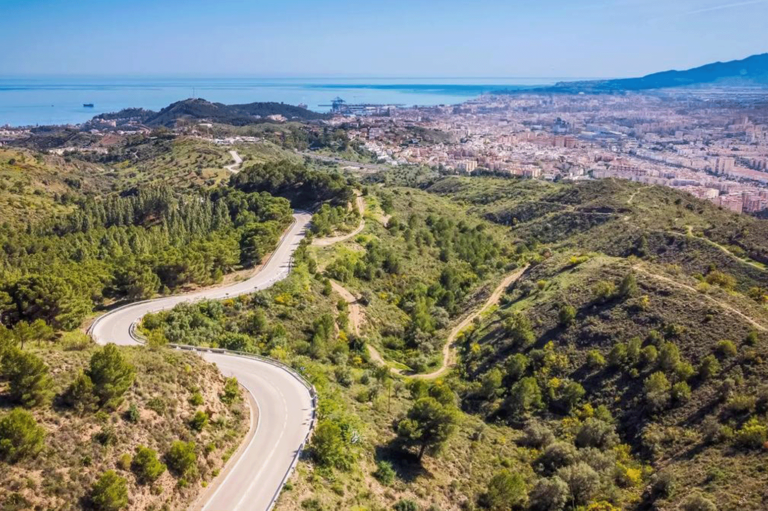
    Just a few minutes from Málaga city centre, the Montes de Málaga offer several hiking routes with signposted trails and picnic areas; there are also various country inns and restaurants where you can sample traditional local dishes. The best time to visit is in spring and winter to enjoy the local cuisine and avoid the heat. The most popular routes in the Montes de Málaga are Cerrado del León, Fuente de la Reina and Pocopán. They offer a wide range of options for families, groups and travellers without a car. The La Concepción Botanical Gardens are in the same area and are well worth a visit for their variety and beauty; so, here are some places to stay in Málaga near the Málaga mountains.

    Final recommendations

    If you’re looking for hiking trails in Málaga during your stay, you’ll find options for children, families, groups of friends, keen walkers or couples. From seaside paths to mountains with stunning views, via easily accessible rivers and forests. Finally, here are some links to help you organise your trip. 

    ✔ La Concepción Botanical Gardens – Tickets

    ✔ Caminito del Rey – Official tickets

    ✔ Routes in El Torcal de Antequera

    ✔ WikiLoc: best routes in Málaga 

    At Cubo’s Holiday Homes, we know that many guests combine these kinds of activities with local cuisine, cultural visits and relaxing at their accommodation. If you’d like to enjoy these trails and stay in well-located areas, we can help you find the perfect holiday home in Málaga. 🌅